 By Sophia Rivera
Our Editorial Research & Methodology
The Smart Home Landscape in 2026
If you had asked me three years ago which system was better, I would have given you a very different answer. Back then, we were still fighting with 'skills' that didn't work and devices that refused to talk to each other. But here we are in February 2024, and the game has changed entirely. The arrival of Matter 2.0 and 3.0 has mostly leveled the playing field for hardware. Now, the real battle isn't about which light bulb works with which plug; it is about which AI brain is smart enough to run your life without you having to micromanage it.
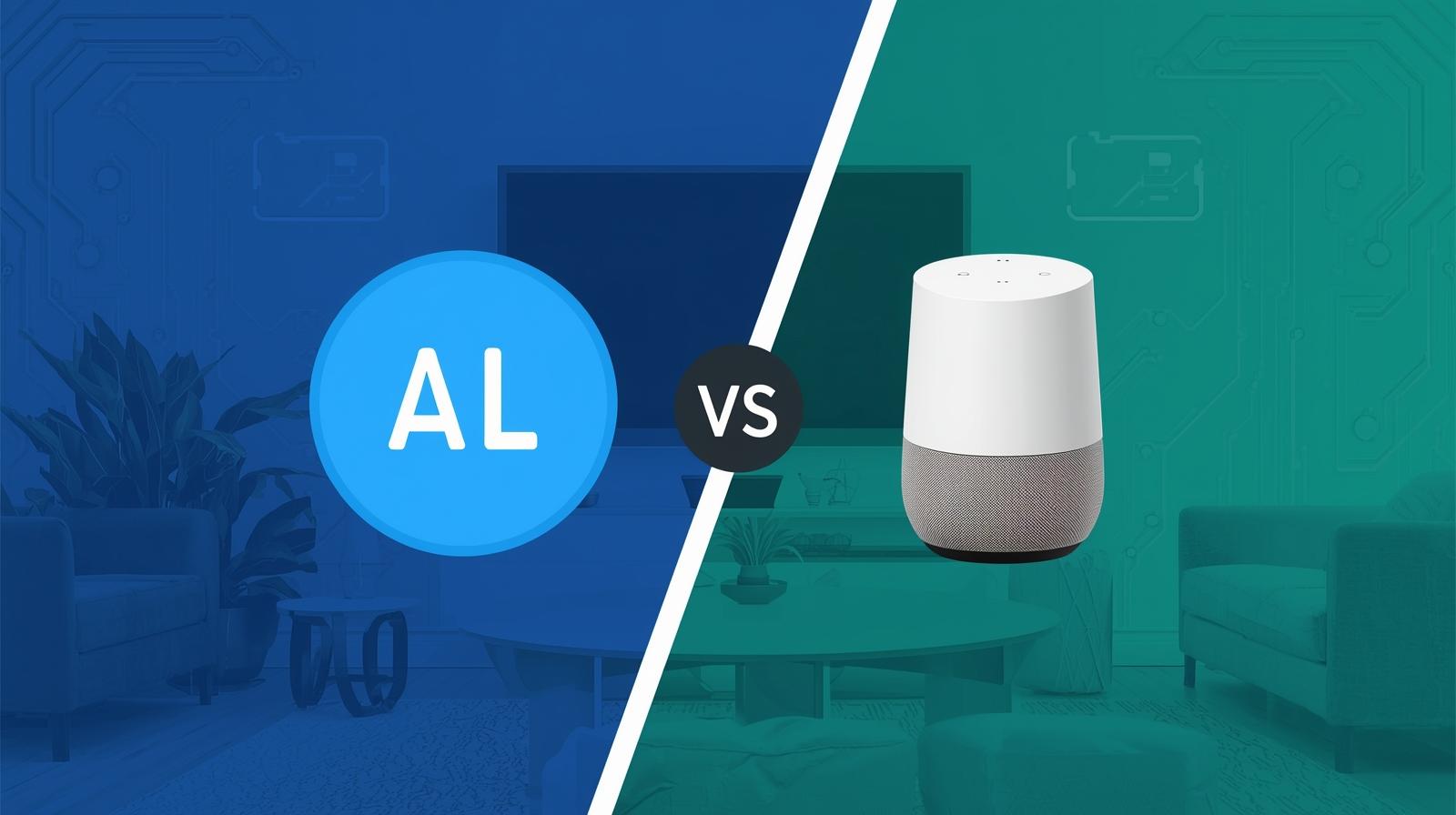
Choosing between Alexa and Google Home today is less about 'compatibility' and more about 'personality.' Do you want an assistant that is proactive and great at shopping, or do you want one that is deeply integrated into your digital life and search history? I have spent the last year living in a 'hybrid' house, and I have some thoughts on where you should put your money.
Alexa: The Proactive Powerhouse
Amazon's Alexa has evolved from a simple voice-activated speaker into a proactive home manager. In my experience, Alexa's greatest strength in 2026 is its ability to anticipate what you need before you ask. Amazon calls these 'Hunches.' For example, if I usually lock the front door at 10 PM but forget one night, Alexa doesn't just wait for me to realize it. She can either lock it for me or send a quick notification asking if I want her to.
🏆 Our Top Picks
Amazon Echo Hub
The Echo Hub is a dedicated 8-inch wall-mountable dashboard designed specifically for smart home control. It supports Matter, Thread, and Zigbee natively, making it the fastest way to manage a complex device network without lag. It is best for users who want a central 'command center' rather than just a voice speaker.
Check Price on Amazon →Google Nest Hub Max
With its 10-inch screen and built-in Nest Cam, this is the ultimate kitchen companion. It uses Google's Gemini AI to provide highly contextual answers and can even recognize your face to show personalized calendars. It is perfect for families who rely heavily on Google Workspace and YouTube.
Check Price on Amazon →Amazon Echo Show 8 (3rd Gen)
This model features spatial audio and a centered camera for better video calls. It includes a built-in smart home hub that processes many commands locally, reducing the 'I'm sorry, I'm having trouble connecting' errors. It is the best all-rounder for bedrooms or small offices.
Check Price on Amazon →Google Nest Audio
If you care about music more than screens, the Nest Audio delivers surprisingly rich sound for its size. It works seamlessly as a stereo pair and uses Media Streamer technology to move music from room to room with a simple voice command. It is ideal for the minimalist who wants great sound without the techy look.
Check Price on Amazon →Sonos Era 300
For those who refuse to choose, the Sonos Era 300 supports both Alexa and Google Home (though not simultaneously). It offers industry-leading spatial audio and Dolby Atmos support. It is the premium choice for audiophiles who want a smart home that sounds like a concert hall.
Check Price on Amazon →The Hardware Advantage
Amazon still wins on hardware variety. From the tiny Echo Pop to the massive Echo Show 15, there is a device for every corner of your house. The new Echo Hub has been a game-changer for my setup. It is a wall-mounted tablet that actually feels like a control panel, not just a tablet glued to a wall. It responds almost instantly because it processes most commands locally rather than sending them to the cloud.
- Pros: Massive device ecosystem, superior 'Routines' engine, excellent for shoppers.
- Cons: The interface can feel cluttered with 'By the way' suggestions and ads.
Google Home: The Context King
Google Home, now fully supercharged by Gemini, is the smarter conversationalist. If you ask Alexa a complex question, she might still get tripped up. Google? It understands context in a way that feels almost eerie. I can say, 'Hey Google, play that song from the movie we watched last night,' and more often than not, it gets it right because it knows my Netflix history and search patterns.
Integration with the Google Workspace
If your life runs on Google Calendar, Gmail, and Google Maps, this is a no-brainer. The way Google Home handles my daily briefing is light years ahead of Alexa. It tells me when I need to leave for my first meeting based on real-time traffic, and it can even summarize the emails I missed while I was sleeping. It feels like a personal assistant, whereas Alexa feels like a very smart remote control.
- Pros: Best-in-class search and AI, seamless integration with Android and Google services, cleaner app design.
- Cons: Hardware options are more limited, and the 'Script Editor' for advanced automations has a steep learning curve.
The Matter Factor: Does Brand Even Matter?
We need to talk about Matter. In 2026, the 'Works with Alexa' or 'Works with Google Home' stickers are mostly relics of the past. Almost every smart plug, light, and thermostat you buy today is Matter-certified. This means you can set up a device in the Alexa app and it will automatically show up in your Google Home app too.
Here is the thing: while the devices are compatible, the experience is not. If you use Alexa to set up a complex routine involving your Matter lights, that routine won't exist in Google Home. You still have to pick a 'primary' brain for your house. In my experience, Alexa is still the better choice for complex automations (if this happens, then do that), while Google is better for manual control and voice queries.
Comparison Table: Alexa vs Google Home
| Feature | Amazon Alexa (2026) | Google Home (2026) |
|---|---|---|
| AI Model | Alexa LLM (Proactive) | Gemini (Conversational) |
| Device Support | Industry Leading | Very High (Matter focused) |
| Privacy | Physical Mic/Cam Toggles | Robust Data Transparency |
| Ease of Use | High (Plug and Play) | Medium (Powerful but complex) |
| Smart Home Hub | Built-in (Zigbee, Thread, Matter) | Built-in (Thread, Matter) |
The Automation Battle: Routines vs Scripts
This is where the two systems really diverge. Alexa's Routines are incredibly easy to build. You can trigger them with voice, time, or even when a camera detects a person. It is visual, simple, and it works. I have a routine where my coffee maker starts when my bedroom motion sensor sees me get out of bed between 6 AM and 7 AM. It took me two minutes to set up.
Google Home, on the other hand, has introduced a 'Script Editor.' If you are a bit of a tech nerd, you will love this. It allows for much more complex logic (using 'and' / 'or' conditions) that Alexa struggles with. However, if you just want your lights to turn off when you leave the house, Google's app can sometimes feel like it is making you work too hard for a simple task.
Privacy and Local Control
In the early days, we were all worried about these things 'spying' on us. By 2026, both companies have had to get serious about privacy to stay competitive. Most voice processing now happens locally on the device. This means when you say 'turn on the lights,' the audio never even leaves your house. It is faster and more private.
Amazon has the edge on physical privacy. Almost all Echo Show devices have a physical slider that blocks the camera lens. Google relies more on software toggles and a single physical switch on the back of their devices. If you are the type of person who puts tape over your laptop camera, you will probably feel more comfortable with Alexa's hardware.
Which One Should You Choose?
After years of testing, I have realized there is no 'perfect' system, only the system that is perfect for you. Here is my breakdown of who should buy what.
Choose Alexa if:
You want a system that 'just works' out of the box. If you have a large house with dozens of smart devices from different brands, Alexa's superior routine engine and hardware variety make it the most reliable choice. It is also the clear winner if you are a frequent Amazon shopper, as the integration with your orders and deliveries is seamless.
Choose Google Home if:
You are already deep in the Google ecosystem. If you use an Android phone and rely on Google services for your work and personal life, the friction of switching to Alexa isn't worth it. Google Home is also the better choice for people who want to ask their assistant complex questions or use it as a high-end digital photo frame (Google Photos integration is still miles ahead of Amazon's version).
Final Thoughts
The 'war' between Alexa and Google Home is mostly over, and the winner is the consumer. Because of Matter, you are no longer locked into one brand for life. You can start with an Echo Dot today and add a Nest Hub tomorrow. But for the sake of your own sanity, I recommend picking one as your 'primary' interface. My house stays on Alexa for the heavy lifting of automations, but I keep a Nest Hub in the kitchen for recipes and YouTube. It is a setup that works for me, and in 2026, the best smart home is the one that stays out of your way and just works.
Frequently Asked Questions
Can I use both Alexa and Google Home together?
Yes, thanks to the Matter standard, most new devices work with both simultaneously. However, managing two separate ecosystems can lead to conflicting routines and a cluttered user experience.
Which system is better for privacy in 2026?
Both have improved significantly with local processing. Google offers more transparent data logs, while Amazon provides more physical hardware toggles for microphones and cameras.
Does Alexa or Google Home have better AI?
As of 2026, Google Home (powered by Gemini) generally handles complex, multi-step conversational queries better, while Alexa excels at proactive 'Hunches' and device control speed.