 By Kevin Ramirez
Our Editorial Research & Methodology
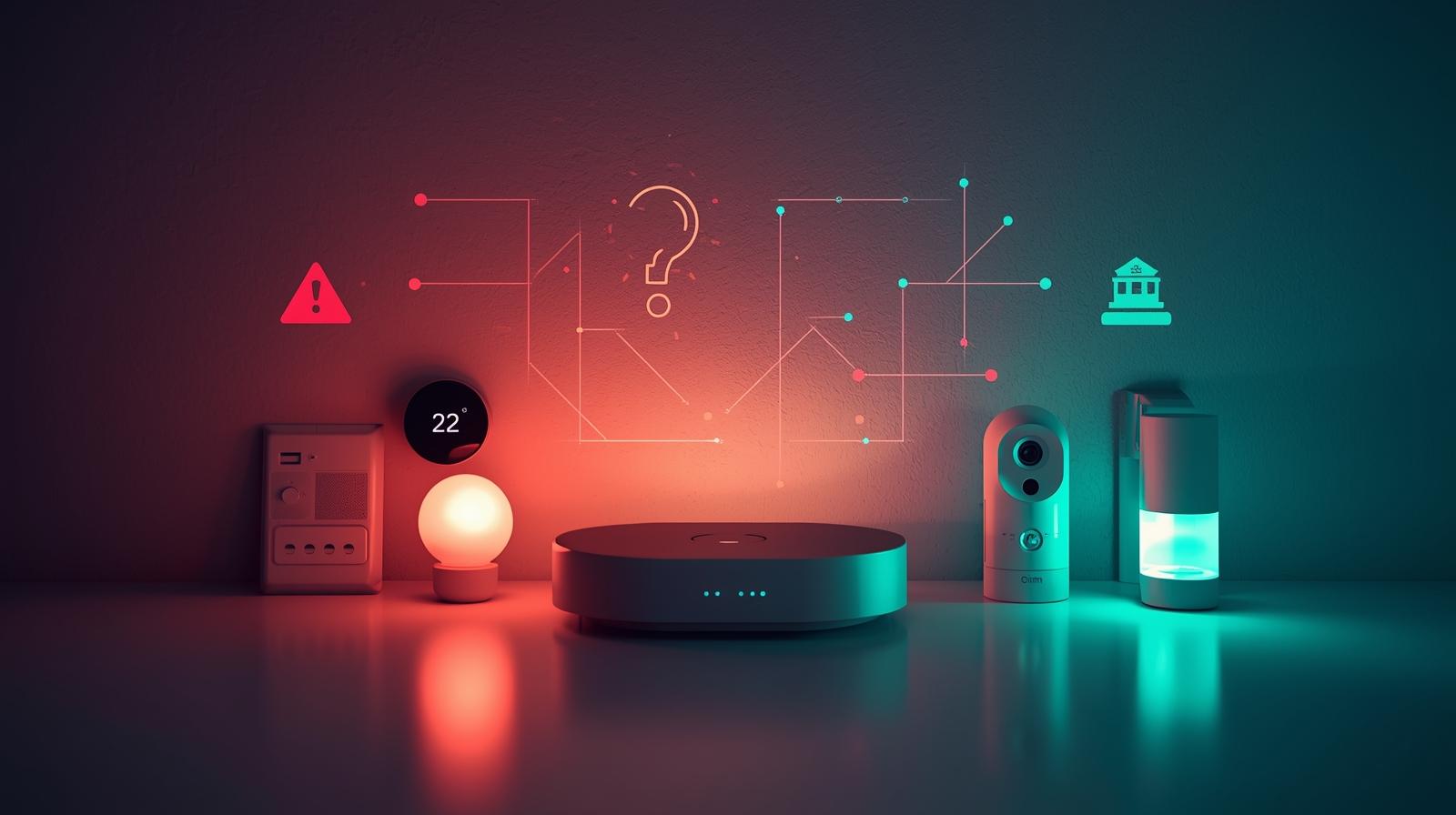
You walk into your living room, ask the lights to dim for a movie, and... nothing happens. Or worse, one light turns red, the other stays bright white, and your smart blinds start closing for no reason. It is frustrating. In 2026, we were promised a world where everything just works. But as anyone with a Matter-enabled hub knows, technology still has a mind of its own.
When your smart home automation stops working, it usually is not a single 'broken' device. It is almost always a communication breakdown. Think of your smart home like a dinner party. If the guests speak different languages or the room is too loud to hear, the conversation falls apart. This guide is about getting everyone talking again.
The 2026 Reality: Why Matter and Thread Still Fail
We are well into the era of Matter 1.4 and Thread 1.4, which were supposed to end the 'protocol wars.' While things are better than they were five years ago, we now face new issues. The most common culprit today is the Border Router conflict. If you have an Apple TV, a Google Nest Hub, and an Amazon Echo all acting as Thread Border Routers, they sometimes fight over who is in charge of the mesh network.
Here is the thing: Matter was designed for interoperability, but 'interoperable' does not mean 'invincible.' When an automation fails, the first thing you should check is your Thread Network partitions. If your devices have split into two different 'islands' of connectivity, they cannot see each other. You can usually spot this in your primary controller app (like Home Assistant or Apple Home) by looking for 'unresponsive' status on half your devices while the others work fine.
The Wi-Fi 7 and 6GHz Complication
If you recently upgraded to a Wi-Fi 7 router, you might have inadvertently sabotaged your older smart gear. Many legacy smart plugs and bulbs only support 2.4GHz. Modern routers often try to 'steer' devices to higher bands or use a single SSID for all frequencies. This confuses older chips. If your devices are dropping off, try creating a dedicated 2.4GHz IoT network with a separate name. It sounds old-school, but it works.
Step 1: The Power Cycle (Done Right)
I know, 'turn it off and on again' is a cliché. But in a smart home, the order matters. If you just reboot a bulb, it might reconnect to a weak signal. If you want a real fix, follow this sequence:
🏆 Our Top Picks
Eero Max 7 Mesh Wi-Fi Router
This is the gold standard for 2026 smart homes. It supports Wi-Fi 7 and acts as a powerful Thread Border Router, ensuring your Matter devices have a stable backbone. It is best for large homes with over 50 smart devices.
Check Price on Amazon →Apple TV 4K (2025 Model)
The latest Apple TV 4K is more than a streamer; it is the most reliable Thread Border Router on the market. Its hardwired ethernet port ensures your smart home commands don't rely on wireless hops for the primary controller.
Check Price on Amazon →Eve Energy Smart Plug (Matter)
This plug uses Matter over Thread, making it a perfect 'repeater' to strengthen your mesh network. It provides energy monitoring and is built with a high-quality radio that rarely drops connection.
Check Price on Amazon →Home Assistant Green
For those tired of cloud outages, this hub keeps everything local. It is the best way to unify Zigbee, Z-Wave, and Matter devices without relying on an internet connection. It has a learning curve but offers unmatched reliability.
Check Price on Amazon →Philips Hue Bridge
Even in 2026, the Hue Bridge remains the most stable lighting controller ever made. It uses a dedicated Zigbee channel that stays away from your Wi-Fi, making it the 'set it and forget it' choice for smart bulbs.
Check Price on Amazon →- Unplug your Hub or Border Router: This forces the 'brain' to clear its cache.
- Power down the affected device: Pull the batteries or flip the wall switch.
- Wait 60 seconds: Let the capacitors fully drain.
- Plug the Hub in first: Let it fully boot and establish the mesh network.
- Power the device back on: This forces it to seek out the strongest, freshest path to the hub.
In my experience, this solves about 70 percent of 'No Response' errors in HomeKit and Google Home. It forces the Thread leader to reassign roles to the child nodes.
Step 2: Hunting for Signal Interference
Physical barriers are the silent killers of automation. You might think a thin wall is fine, but what is inside that wall? Large mirrors, water pipes, and metal studs act like shields for radio waves. If your smart lock is struggling, check if there is a massive decorative mirror on the wall between it and the hub.
The Microwave and Zigbee Conflict
If you are still using Zigbee devices (like older Philips Hue or Ikea Tradfri), remember they operate on the 2.4GHz band. This is the same frequency your microwave uses. If your kitchen lights flicker or stop responding specifically when you are heating up lunch, you have found your problem. Moving your Zigbee hub just three feet away from the router or microwave can make a massive difference.
Step 3: Fixing Automation Logic Loops
Sometimes the hardware is fine, but the 'brain' is confused. This happens often with 'If-Then' statements. For example, if you have an automation that says 'Turn on the porch light when the camera detects motion' and another that says 'Turn off the porch light after 5 minutes,' they can clash. If the camera keeps seeing motion, the 'Off' command might trigger while the 'On' command is still trying to execute.
Look for Ghost Triggers. This is when a device turns on for no apparent reason. Usually, this is caused by a forgotten routine in a secondary app. Maybe you set up an automation in the Alexa app three years ago and forgot about it, but now you use Apple Home. Both are fighting for control. Pick one 'source of truth' for your automations and delete the rest.
Connectivity Protocol Comparison
| Protocol | Typical Range | Reliability | Best For |
|---|---|---|---|
| Thread | 30-50 feet (per node) | High (Self-healing) | Sensors, Locks, Modern Bulbs |
| Matter (Wi-Fi) | Router Dependent | Medium | High-bandwidth (Cameras) |
| Zigbee | 40-60 feet | High | Lighting, Low-power sensors |
| Z-Wave | 100 feet | Very High | Security, Long-range needs |
| Bluetooth | 15-20 feet | Low | Initial setup only |
Step 4: Managing Firmware and App Updates
In the world of 2026, 'auto-update' is a double-edged sword. A firmware update for your Matter bridge might break the integration with your older Z-Wave setup. If a device that worked yesterday is dead today, check the 'Last Updated' timestamp in the device settings. If it updated overnight, you might need to remove and re-add the device to the hub to refresh the security certificates.
What most people miss is the Hub firmware. We focus so much on the bulbs that we forget the Apple TV or the Home Assistant Green needs an update too. An outdated coordinator cannot speak the language of a newly updated end-device.
Step 5: The IP Address Conflict
Every Wi-Fi smart device needs an IP address. Most routers use DHCP, which hands out addresses like temporary parking passes. Sometimes, the router tries to give the same 'parking spot' to two different devices. This causes one of them to fall off the network. To fix this permanently, go into your router settings and set Static IP Reservations for your most important devices (hubs, cameras, and smart displays). This ensures they always have the same 'home' on the network.
When to Use the 'Nuclear Option'
If you have tried everything and the device still shows 'Offline,' it is time for a factory reset. But do not just delete it from the app. You must physically reset the device (usually by toggling a switch five times or holding a button for 10 seconds) and then remove it from your smart home controller. If you do not remove it from the software side, the 'ghost' of that device will stay in your mesh network, potentially causing lag for other devices.
A Note on Battery Health
It sounds simple, but check your batteries. In 2026, many sensors use CR2450 or CR2032 coin cells. Even if the app says '20% battery,' that might not be enough voltage to send a signal through a wall. If a device is acting 'flaky' rather than being completely dead, a fresh battery is the cheapest fix you will find.
Advanced Troubleshooting: Checking the Logs
If you are using a pro-sumer system like Home Assistant or Hubitat, look at the Zigbee or Thread Map. These systems give you a visual look at how your devices are connected. If you see a device with a single, thin red line connecting it to the hub, it has a weak link. Adding a 'repeater' (any mains-powered smart plug) halfway between that device and the hub will usually fix the issue instantly.
Remember, smart home tech is a marathon, not a sprint. It requires a little bit of maintenance every few months to keep the 'gears' greased. By following these steps, you can move from a home that is 'sometimes smart' to one that is actually reliable.
Frequently Asked Questions
Why does my smart light say 'No Response' but still works in its own app?
This is usually a cloud-to-cloud sync error. The device is connected to the manufacturer's server, but the link between that server and your main hub (like Google or Apple) has timed out. Re-linking the account usually fixes this.
Can a single bad device slow down my entire smart home?
Yes, especially in Zigbee or Thread networks. A 'chatty' device with a failing radio can flood the network with junk data, causing lag for every other device in the mesh.
Do I really need a dedicated IoT network for my smart home?
It is highly recommended. Separating your smart devices onto a 2.4GHz-only SSID prevents 'band steering' issues and keeps your main high-speed Wi-Fi clear for streaming and gaming.