 By Natalie Chen
Our Editorial Research & Methodology
The Pulse of Panic: What That Green Light Actually Means
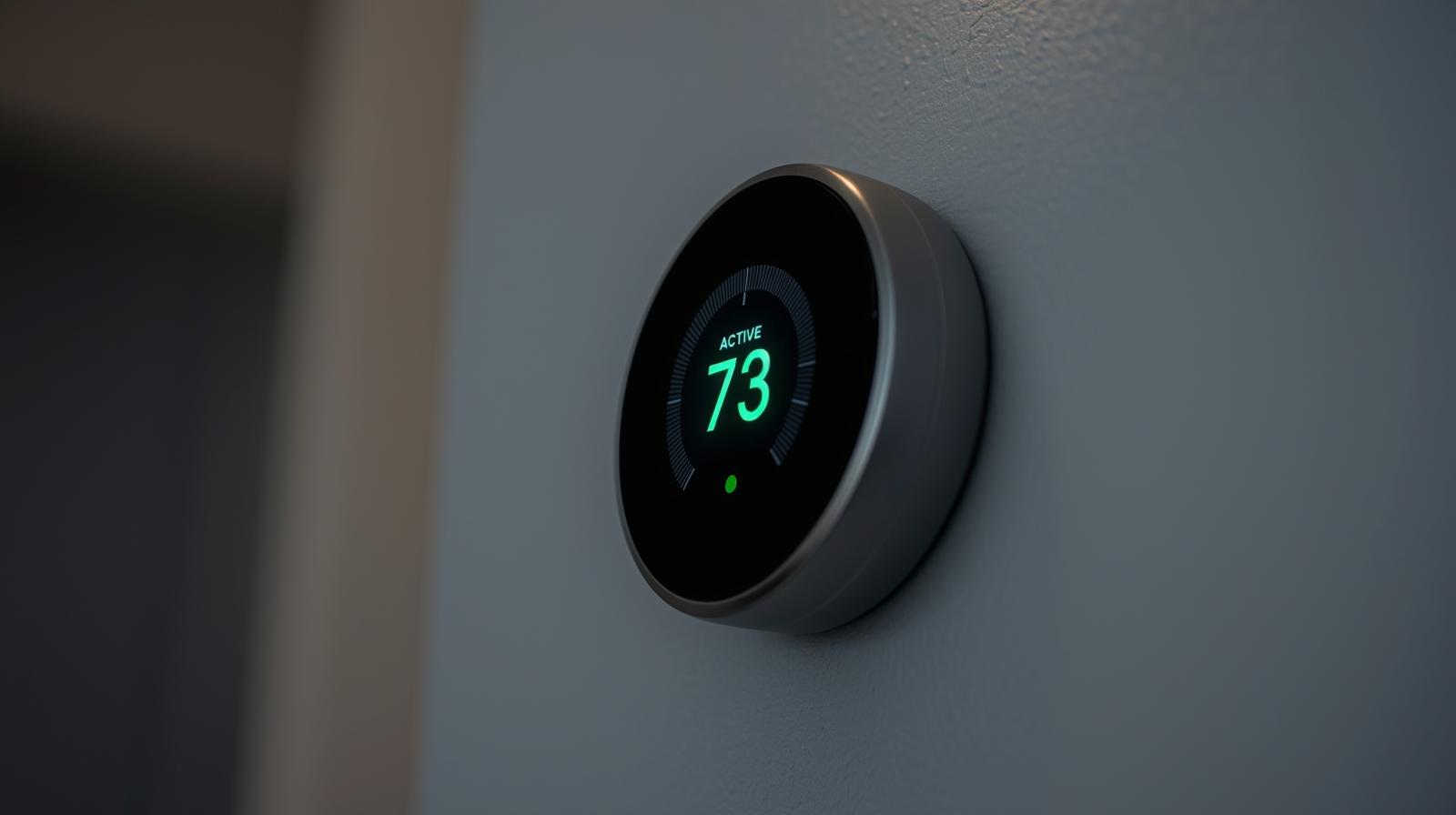
You are standing in your hallway, staring at your Google Nest Thermostat. Instead of the usual temperature display, you see a small, steady green light blinking at you. It feels like the device is trying to communicate in Morse code, but you just want your heat to turn on. Look, I have been there. It is frustrating when a 'smart' device suddenly feels like a paperweight.
In most cases, a blinking green light is not a sign of a dead device. It is usually a sign of life. Specifically, it means the thermostat is performing a software update, restarting, or booting up. Under normal conditions, this should last about one to two minutes. But if you have been staring at that blink for ten minutes or more, we have a problem. In my experience, this usually points to a software hang or a power delivery issue that is preventing the update from finishing.
The 2026 Context: Matter and Thread Updates
Since the widespread adoption of Matter 2.0 and the latest Thread networking standards, Nest thermostats are more active than ever. They are constantly communicating with other devices in your home. Sometimes, a firmware update gets stuck because the 'handshake' between your thermostat and your border router (like a Nest Hub or a modern Wi-Fi 7 router) fails. This leaves the device in a loop, pulsing green while it waits for data that never arrives.
The Quick Fix: The 10-Second Restart
Before you start pulling wires out of your wall, try the simplest solution first. Most people miss this because they are afraid of breaking the screen. You can force a restart without losing any of your settings. Here is how you do it on the Nest Learning Thermostat (4th Gen) and older models.
🏆 Our Top Picks
Google Nest Learning Thermostat (4th Gen)
The 2024 flagship model features a borderless glass display and advanced AI energy mapping. It is the most resilient against update freezes due to its upgraded processor and improved Matter integration.
Check Price on Amazon →Google Nest Power Connector
The perfect fix for homes without a C-wire. This official adapter ensures your thermostat gets consistent power, preventing the low-battery issues that cause green light blinking loops.
Check Price on Amazon →Anker 511 Charger (Nano 3)
A compact, high-speed USB-C wall charger. Essential for manually reviving a Nest display that has lost its charge due to HVAC power issues.
Check Price on Amazon →Ecobee Smart Thermostat Premium
A top-tier alternative if you find Nest's power requirements too finicky. It includes a Power Extender Kit in the box and offers robust air quality monitoring.
Check Price on Amazon →Press and hold the thermostat display down like a button. Keep holding it. You might see the screen flicker or go dark. Do not let go yet. Hold it for a full 10 to 12 seconds. Eventually, the screen will go completely black and then show the Google 'G' logo. This is a hard reboot. It clears the temporary cache and usually forces the stuck update to either finish or roll back. If the green light disappears and your home screen returns, you are good to go.
When the Blink Won't Quit: Power Issues
If the restart did not work, we need to talk about power. This is the 'hidden' reason for 90 percent of Nest issues. Your thermostat has a small internal battery. It stays charged by drawing power from your HVAC system. If it does not get enough juice, it cannot complete a software update. Updates are power-intensive. If the battery level drops below a certain threshold during the install, the Nest will just sit there blinking green, unable to cross the finish line.
The C-Wire Problem
Many older homes were wired without a 'C-wire' or Common wire. Without this, the Nest has to 'steal' power from the heating or cooling wires when the system is running. In 2026, with more complex HVAC systems and high-efficiency heat pumps, this power-stealing method is becoming less reliable. If your Nest is blinking green and the screen is unresponsive, your battery might be too low to even turn the display on.
| Symptom | Likely Cause | Immediate Action |
|---|---|---|
| Blinks for 2 mins | Standard Update | Wait it out. |
| Blinks for 15+ mins | Software Freeze | Force restart (10-sec hold). |
| Blinks then goes black | Low Battery | Charge via USB. |
| Blinks after power outage | Network Sync Error | Restart router and Nest. |
How to Manually Charge Your Nest Display
Here is a trick most people do not know. You can charge your Nest display just like a phone. If your thermostat is stuck in a green-light loop due to low power, pull the display off the wall base. Look at the back of the display unit. Depending on your model, you will see either a Micro-USB or a USB-C port.
Plug it into a wall charger (not a computer USB port, as they often do not provide enough amperage) for at least 30 minutes. While it is charging, the green light might continue to blink, but you are giving it the 'muscle' it needs to finish the update. After 30 minutes, plug it back into the wall base. Usually, it will boot up immediately and the green light will vanish.
Deep Dive: Troubleshooting the Base and Wiring
If charging the display did not work, the issue might be the physical connection. I have seen cases where a tiny bit of dust or a bent pin on the back of the thermostat prevents the unit from seeing the power coming from the wall. Take a flashlight and look at the pins on the back of the display. Are any of them bent? Is there drywall dust inside the connector?
Check Your HVAC Breaker
It sounds obvious, but check your circuit breaker. If the breaker for your furnace or air handler tripped, the Nest is running on its tiny internal battery. Once that battery hits a critical low, it might try to enter a low-power update mode, resulting in that infinite green blink. Ensure your HVAC system has power. If the furnace door is not closed properly, a safety switch might be cutting power to the entire system, including your thermostat wires.
Advanced Scenarios: Network Interference in 2026
We live in a world of crowded airwaves. By 2026, your home is likely filled with Thread devices, Zigbee sensors, and Wi-Fi 7 signals. Sometimes, the green light blinks because the Nest is trying to connect to your Wi-Fi to verify the update, but the signal is being blocked. This is common if you have recently moved your router or added a new mesh node.
Try turning off your Wi-Fi router for one minute and then turning it back on. This forces all devices in the house to re-establish their connections. Often, the Nest will find a cleaner path to the Google servers, finish its verification, and return to normal operation. If you use a Matter-enabled hub, ensure the hub is online and updated. A 'zombie' hub can sometimes hang up the update process for every child device connected to it.
The Factory Reset: The Nuclear Option
If you have tried the 10-second restart, charged it via USB, and checked your breakers, and you still have a blinking green light, it is time for a factory reset. This is the last resort because you will have to set up your schedules and Wi-Fi again. To do this when the screen is unresponsive, you may need to use the Google Home app. If the app says the device is 'Offline,' you are stuck with the manual method.
Remove the display from the wall. Most models have a small reset button or require a specific sequence of holding the screen while plugging in USB power. Check your specific model's manual for the 'Hard Reset' sequence. Once reset, the device will act like it just came out of the box. If it still blinks green after a factory reset, you are likely looking at a hardware failure, and it is time to check your warranty.
When to Call a Professional
I am a big fan of DIY, but there is a limit. If you see the green light blinking and you smell something 'toasty' or metallic near the thermostat or your furnace, stop. Turn off the breaker immediately. This could be a short circuit in the 24V transformer of your HVAC system. Also, if you find that your Nest works fine for a week and then returns to the green blink, your system's transformer is likely failing and cannot keep up with the power demand. A pro can install a dedicated C-wire or a high-output transformer to fix this permanently.
Summary of Steps
- Wait 15 minutes to ensure it is not just a slow update.
- Perform a 10-second forced restart by pressing the display.
- Remove the display and charge it via USB for 30 minutes.
- Check your HVAC breaker and furnace door switch.
- Inspect the pins on the back of the device for damage or dust.
- Restart your home Wi-Fi and Matter hubs.
- Perform a factory reset if all else fails.
The blinking green light is a conversation starter between you and your home's brain. Usually, it is just saying 'I am thinking.' Give it the power and the time it needs, and it will go back to keeping you comfortable. Most of the time, a little patience and a USB cable are all you need to win the day.
Frequently Asked Questions
How long should the Nest blink green during an update?
A typical update takes between 1 and 5 minutes. If it exceeds 15 minutes, the device is likely frozen and requires a manual restart.
Can I use my Nest while the green light is blinking?
No, the device is in a boot or update state and will not respond to touch or app commands until the process finishes.
Does a blinking green light mean my battery is dead?
Not necessarily. It usually means an update is in progress. However, if the battery is too low to finish the update, it may stay stuck in this state until manually charged.