 By Kevin Ramirez
Our Editorial Research & Methodology
The Frustration of the Offline Device
You are lying in bed, ready to sleep. You tap the button on your phone to turn off the lamp across the room. Nothing happens. You tap it again. The app says 'Device Offline.' Now you have to get up, walk across the cold floor, and manually click a physical button. It feels like a betrayal of the future we were promised.
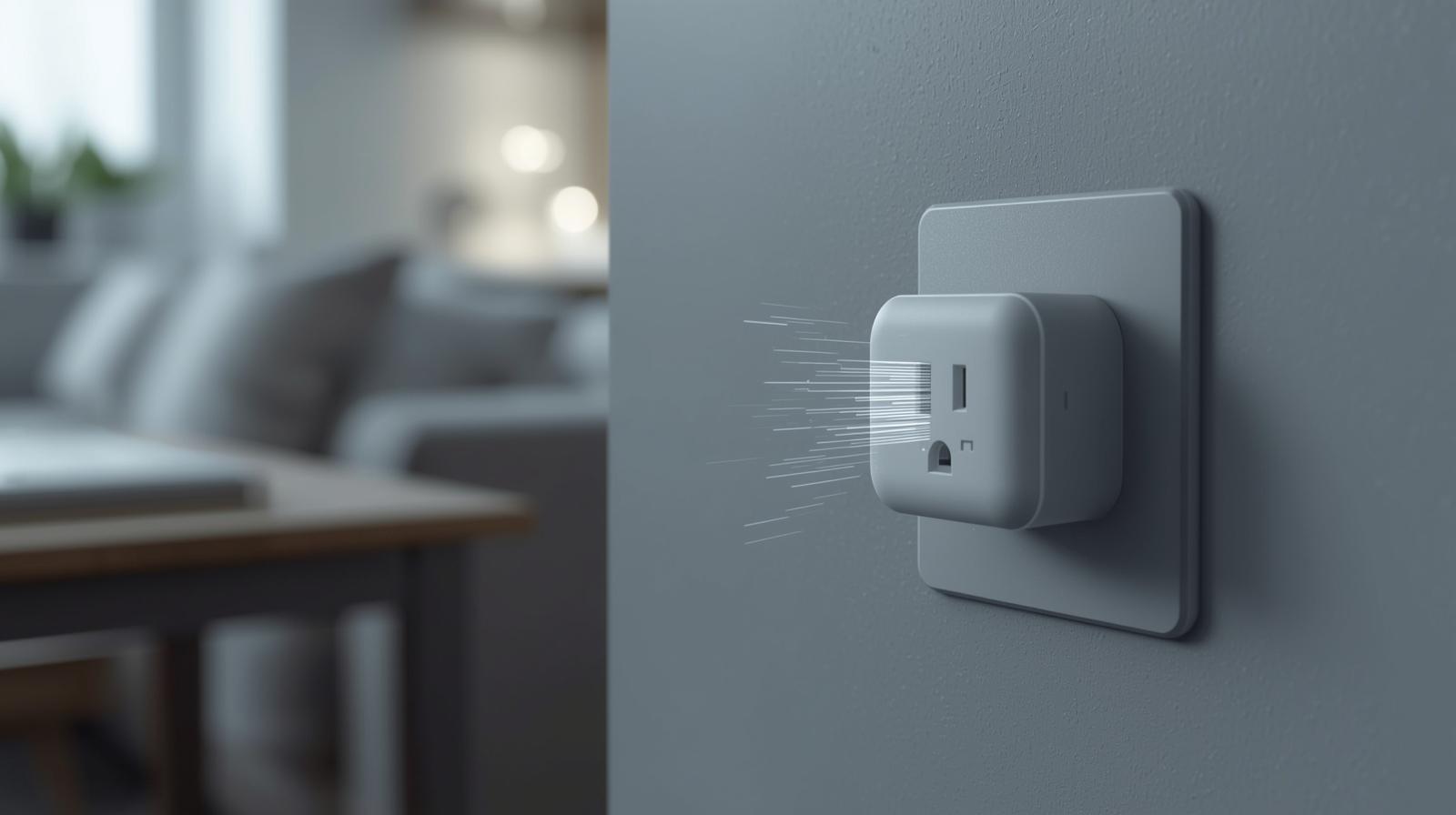
By 2026, smart home tech should be flawless. But here is the thing: even with Matter 2.0 and Wi-Fi 7 becoming standard, smart plugs still drop off the map. It is rarely a 'broken' plug. Usually, it is a communication breakdown between your router, the cloud, and that little plastic box in your wall. Let's dig into why this happens and how you can stop it for good.
1. The 2.4GHz Congestion Trap
Most smart plugs are cheap for a reason. To save money and space, they almost exclusively use the 2.4GHz Wi-Fi band. While your phone and laptop are likely screaming along on the 5GHz or 6GHz bands, your smart plug is stuck in the slow lane with your microwave, your neighbor's old router, and your Bluetooth headphones.
🏆 Our Top Picks
Eve Energy Smart Plug (Matter & Thread)
The gold standard for reliability in 2026. It uses Thread networking to create a self-healing mesh, meaning it doesn't rely on your Wi-Fi signal. It also offers detailed energy monitoring and works natively with Apple Home, Google, and Alexa via Matter.
Check Price on Amazon →TP-Link Kasa KP125M Matter Plug
A fantastic budget-friendly entry into the Matter ecosystem. It supports Matter over Wi-Fi, providing better compatibility than older models while maintaining a slim design that doesn't block the second outlet. Best for those who want Matter features without buying a Thread hub.
Check Price on Amazon →Lutron Caseta Wireless Lamp Dimmer
If you absolutely cannot have a disconnection, Lutron is the answer. It uses a proprietary 'Clear Connect' frequency that is entirely separate from Wi-Fi and Bluetooth. It is more expensive and requires a bridge, but it is virtually fail-proof.
Check Price on Amazon →Philips Hue Smart Plug (Zigbee)
Perfect for those already in the Hue ecosystem. Because it uses Zigbee, it doesn't touch your Wi-Fi at all, making it immune to router congestion. The downside is that it requires the Hue Bridge to access all features.
Check Price on Amazon →In my experience, 90 percent of 'disconnect' issues come down to signal interference. The 2.4GHz band has better range than 5GHz, but it is incredibly crowded. If you live in an apartment complex, your smart plug is fighting dozens of other networks for a 'slice' of the airwaves. When the noise gets too loud, the plug loses its handshake with the router and goes offline.
How to fix the congestion
First, try changing your router's 2.4GHz channel. Most routers are set to 'Auto,' which sounds smart but often fails. Manually set your 2.4GHz channel to 1, 6, or 11. These are the only non-overlapping channels. If your neighbor is on channel 1, try 11. This simple swap can often stabilize a shaky connection instantly.
2. The 'Band Steering' Conflict
Modern routers use a feature called Band Steering. This combines the 2.4GHz and 5GHz bands into one single Wi-Fi name (SSID). The router then decides which band is best for your device. This is great for an iPhone, but it is poison for a simple smart plug.
The plug tries to connect to the 2.4GHz side, but the router tries to 'push' it to the 5GHz side to clear up traffic. Since the plug can't actually talk to 5GHz, it gets confused and drops the connection. It is a digital game of 'he said, she said' where nobody wins.
The Solution: If your router allows it, create a dedicated 'IoT' network that only uses the 2.4GHz band. Keep your smart plugs, bulbs, and sensors on this network. It keeps them away from your high-speed devices and prevents the router from trying to steer them into a band they can't use.
3. Distance and Physical Barriers
We often tuck smart plugs behind heavy furniture, metal filing cabinets, or inside kitchen islands. We forget that these plugs have tiny, internal antennas. A single brick wall or a large mirror can cut your Wi-Fi signal strength by half.
What most people miss is that 'signal bars' on your phone don't tell the whole story. Your phone has a massive, sophisticated antenna system. Your $15 smart plug does not. Just because your phone works in that corner doesn't mean the plug can maintain a stable link.
The Mirror and Metal Rule
Avoid placing smart plugs directly behind mirrors or large metal appliances like refrigerators. These act as shields, bouncing the Wi-Fi signal away before it can reach the plug's internal chip. If you must have a plug in a dead zone, it is time to look into a mesh Wi-Fi system or a signal repeater.
4. DHCP Lease Timeouts
Every device on your network needs an IP address. Your router 'leases' these addresses for a set amount of time—usually 24 hours. When the lease is up, the device has to ask for a new one. Some lower-end smart plugs are terrible at this. They forget to ask for a new address, or they try to keep using the old one after the router has given it to someone else.
This results in a 'ghost' device. The plug thinks it is connected, but the router isn't talking to it anymore. You will see the plug's light stay solid, but the app says it is gone.
Setting a Static IP
The pro move here is to go into your router settings and 'reserve' an IP address for your smart plugs. This is called a Static IP or DHCP Reservation. By telling the router to always give 'Plug A' the same address, you remove the need for the constant lease-renewal dance. It makes the connection much more 'sticky' and reliable.
5. Power Management and 'Deep Sleep'
In 2026, energy efficiency is a huge selling point. Some smart plugs have aggressive power-saving modes. If the plug isn't 'toggled' for a few days, it might enter a deep sleep state to save a fraction of a penny in electricity. Sometimes, it fails to wake up when the app sends a command.
Check your plug's specific app for 'Eco Mode' or 'Power Saving' settings. If you find them, turn them off for any device that needs to be 100 percent reliable. A smart plug that doesn't respond isn't smart; it's just a plastic brick.
6. Comparing Connection Types
Not all smart plugs are created equal. The technology they use to talk to your home determines how often they will fail. Here is a quick breakdown of the tech you will find in 2026.
| Technology | Reliability | Pros | Cons |
|---|---|---|---|
| Wi-Fi (2.4GHz) | Moderate | Cheap, no hub needed | Prone to interference |
| Zigbee | High | Mesh networking, low power | Requires a hub |
| Thread (Matter) | Very High | Self-healing, fast, modern | Requires Matter controller |
| Bluetooth | Low | Easy setup | Very short range |
7. The Matter and Thread Revolution
If you are tired of Wi-Fi headaches, it is time to move to Thread. Thread is a mesh networking protocol designed specifically for the smart home. Unlike Wi-Fi, where every plug talks directly to the router, Thread devices talk to each other. If one plug is too far from the router, it can pass its signal through another Thread device nearby.
In my experience, switching to Thread-enabled plugs (which usually carry the 'Matter' logo) solves 99 percent of disconnection issues. They don't clog your Wi-Fi, they use almost no power, and they respond instantly. If you are buying new plugs today, do not buy 'Wi-Fi only' models unless you are on a very tight budget.
8. When to Factory Reset
Sometimes, the internal software (firmware) of the plug just gets corrupted. It happens. If you have tried the router tweaks and the plug still drops off every few hours, a factory reset is your last resort. Usually, this involves holding the power button for 10 to 15 seconds until the light flashes a specific color.
Before you set it back up, check for firmware updates in the manufacturer's app. Companies often release 'stability' patches that fix known bugs with specific routers. If your plug is three years old and hasn't been updated, that is likely your culprit.
Summary of Action Steps
- Check the band: Ensure your plug isn't being 'steered' between 2.4GHz and 5GHz.
- Change the channel: Use 1, 6, or 11 on your 2.4GHz Wi-Fi.
- Reserve the IP: Give your plug a static IP in your router settings.
- Clear the path: Move the plug away from metal and mirrors.
- Upgrade to Thread: If Wi-Fi keeps failing, switch to Matter-over-Thread hardware.
Frequently Asked Questions
Why does my smart plug work in the app but not with Alexa?
This is usually a cloud-to-cloud sync issue. Disable the manufacturer's skill in the Alexa app and re-enable it to refresh the digital handshake.
Can a failing router cause only one plug to disconnect?
Yes. If that specific plug is at the edge of the router's range or on a congested channel, it will drop while others stay connected.
Do I need a hub for a Matter smart plug?
You need a Matter Controller (like a HomePod, Echo, or Nest Hub). If it is a Thread-based Matter plug, you specifically need a Thread Border Router.