 By James Carter
Our Editorial Research & Methodology
Why Florida Humidity is a Different Beast
If you live in Florida, you know the drill. You step outside and your glasses immediately fog up. It is not just the heat that gets you; it is that thick, heavy moisture that makes 90 degrees feel like 110. Inside your home, that same moisture is your biggest enemy. It leads to that 'sticky' feeling, musty smells, and eventually, the dreaded mold growth that can ruin a house in weeks.
Most people think a thermostat is just a digital switch for the air conditioner. In the rest of the country, that might be true. But in Florida, your thermostat is actually a humidity manager. If it is not smart enough to understand the relationship between temperature and moisture, you are either going to be sweating in a damp room or freezing because you cranked the AC down to 68 just to dry the air out. Neither is a good option for your comfort or your wallet.
Here is the thing: standard thermostats only care about the temperature. They run the AC until the room hits 75 degrees, then they shut off. But in Florida, the air might still be at 70 percent humidity when that happens. A smart thermostat designed for high-moisture climates uses specific logic to keep the compressor running just long enough to pull that water out of the air without turning your living room into a walk-in freezer.
The Science of the 'Sticky' House
To understand why you need a specific type of smart tech, you have to understand relative humidity. When the air is saturated with water, your sweat cannot evaporate. That is why you feel hot even if the AC is running. Most experts agree that the 'sweet spot' for a Florida home is between 45 and 55 percent humidity. Anything higher and you risk dust mites and mold; anything lower and you are just wasting money on electricity.
The Secret Weapon: Dehumidification Features
When you are shopping for a smart thermostat in 2026, you need to look for three specific features that are non-negotiable for the Sunshine State. If a device does not have these, it is just a fancy remote control, not a Florida-ready tool.
🏆 Our Top Picks
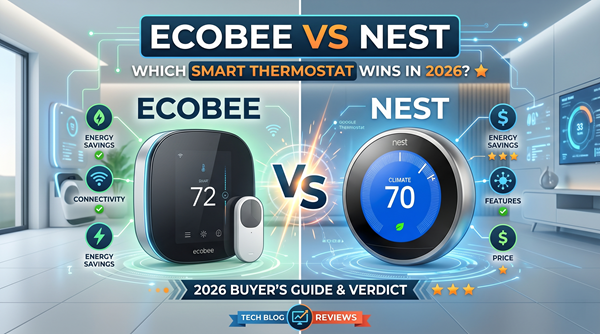
Ecobee Smart Thermostat Premium
This is the gold standard for humidity control. It features a dedicated 'AC Overcool Max' setting that allows you to specify exactly how much the system should run to hit humidity targets. It also includes a built-in air quality monitor and a zinc-bodied design that feels premium.
Check Price on Amazon →Google Nest Learning Thermostat (4th Gen)
The latest Nest uses advanced AI to manage 'Cool to Dry' cycles, preventing the short-cycling that often plagues Florida homes. It is incredibly easy to use and integrates perfectly with Google Home ecosystems, though it offers slightly less manual control than the Ecobee.
Check Price on Amazon →Honeywell Home T10 Pro Smart Thermostat
A favorite among HVAC professionals, the T10 Pro is designed to handle complex systems including whole-home dehumidifiers. Its wireless sensors are the most accurate in the business, making it ideal for large Florida ranch-style homes with uneven cooling.
Check Price on Amazon →Emerson Sensi Touch 2
If you want a reliable, no-frills smart thermostat that just works, the Sensi Touch 2 is it. It has a high-contrast display that is easy to read and offers great humidity monitoring. It is particularly good for older Florida homes that may have limited wiring options.
Check Price on Amazon →1. AC Overcool Max (or 'Cool to Dry')
This is the holy grail of Florida HVAC settings. This feature allows the thermostat to keep the air conditioner running even after it reaches your target temperature, specifically to lower the humidity. For example, if you set your AC to 75, but the humidity is still 65 percent, the thermostat will 'overcool' the house down to 73 degrees to pull more moisture out. It stops once the humidity goal is met or it hits a safety threshold so you do not get too cold.
2. Dehumidifier Terminal (DH) Support
If you have a high-end HVAC system or a dedicated whole-home dehumidifier, you need a thermostat with a 'DH' terminal. This allows the thermostat to control the dehumidifier independently of the cooling system. In the 'shoulder seasons'—those weird weeks in November or March where it is 75 degrees and 90 percent humidity—you might not need the AC at all, but you definitely need the dehumidifier. A smart thermostat with DH support can run just the dehumidifier, saving you a fortune on cooling costs.
3. Fan Circulation Logic
In a dry climate, running the fan all the time is fine. In Florida, it is a disaster. If your fan runs right after the AC cycle ends, it blows air over the soaking wet evaporator coils, pushing all that moisture right back into your house. Smart thermostats for Florida have 'Fan Dissipation' settings that ensure the fan stops long enough for the water to drain away before it starts circulating air again.
Top Smart Thermostats for the Sunshine State
I have tested dozens of these units in real-world Florida conditions. Here are the ones that actually stand up to the swamp. We are looking at sensor accuracy, software logic, and how well they handle the unique demands of a 24/7 cooling season.
Ecobee Smart Thermostat Premium
The Ecobee Premium is currently the king of the hill for humidity management. Why? Because it has the most granular 'AC Overcool' settings in the industry. You can tell it exactly how many degrees it is allowed to overcool (usually 2-3 degrees is the sweet spot). It also comes with a built-in air quality monitor that tracks VOCs and carbon dioxide, which is helpful when you keep your windows shut for ten months of the year.
One thing most people miss is the remote sensors. Florida homes often have 'hot spots' or 'humid spots' in back bedrooms. The Ecobee sensors track both temperature and occupancy, so it knows if you are actually in that humid room and adjusts the system accordingly. The only downside? It is a bit bulky on the wall compared to the sleek Nest.
Google Nest Learning Thermostat (4th Gen)
The 4th Gen Nest, released recently, has finally fixed some of the humidity 'drifting' issues of older models. Its 'Cool to Dry' feature is very intuitive. It uses AI to learn how long your specific AC unit takes to drop the humidity by 5 percent and optimizes the run time to prevent short-cycling. Short-cycling is when your AC turns on and off too quickly, which kills your compressor and leaves the air humid.
The Nest is great for people who want to 'set it and forget it.' However, it offers less manual control than the Ecobee. If you are a data nerd who wants to see a graph of your humidity levels every hour, the Nest might feel a little too simplified for you.
Honeywell Home T10 Pro
This is the 'pro's choice.' You often see these installed by HVAC contractors because they are incredibly reliable. The T10 Pro is excellent if you have a complex setup, like a multi-stage heat pump or a separate dehumidification system. It uses RedLINK technology to connect to sensors without taxing your Wi-Fi. It is not as 'pretty' as the others, but it is a workhorse that handles Florida's electrical surges and humidity spikes without a hiccup.
Comparison Table: Humidity Features at a Glance
| Feature | Ecobee Premium | Nest 4th Gen | Honeywell T10 Pro | Sensi Touch 2 |
|---|---|---|---|---|
| Overcool Logic | Excellent (Manual) | Good (AI-driven) | Professional Grade | Basic |
| DH Terminal | Yes | Yes (Requires Pro) | Yes | No |
| Remote Sensors | Included | Optional | Included | Optional |
| Humidity Accuracy | +/- 2% | +/- 3% | +/- 1% | +/- 3% |
| Price Point | High | High | Medium-High | Budget-Friendly |
How to Set Up Your Thermostat for Max Comfort
Buying the tech is only half the battle. If you leave it on factory settings, you are leaving money on the table. Here is how I recommend setting up a smart thermostat in a Florida home to keep things crisp and dry.
Set the Humidity Target to 50 Percent
Do not try to hit 40 percent. Your AC will run forever and your skin will get itchy. 50 percent is the magic number where mold cannot thrive but you still feel comfortable. If it is a particularly rainy week, you can bump it to 52 percent to give your system a break.
Adjust the 'Deadband' or Swing Temp
Most thermostats are set to a 0.5-degree swing. This means if you set it to 75, it turns on at 75.5 and off at 74.5. In Florida, this causes the system to cycle too often. Change your 'swing' or 'differential' to 1.5 or 2 degrees. This allows the AC to run for a longer, continuous period, which is much more effective at removing moisture from the air.
Enable Geofencing (With Caution)
Geofencing uses your phone's location to turn the AC up when you leave. This is great for saving money, but in Florida, you cannot let the temp rise too much. If you let your house hit 82 degrees while you are at work, the humidity will spike to 70 percent. When you come home, the AC will have to work three times as hard to 'recover' the air. Set your 'Away' temp no higher than 78 degrees to keep the moisture under control.
Beyond the Thermostat: Total Humidity Control
Even the smartest thermostat cannot fix a broken house. If you are still feeling sticky, there are a few 'Florida-specific' things you need to check. In my experience, these are the three biggest culprits that sabotage your smart thermostat's hard work.
Check Your P-Trap and Drain Line
Your AC pulls gallons of water out of the air every day. That water goes into a plastic pipe called a drain line. In Florida, algae grows in these lines like crazy. If the line gets backed up, the water sits in the drain pan, and the humidity in your house will skyrocket. Use a shop-vac to clear your drain line every six months, and consider a smart float switch that alerts your thermostat if the line is clogged.
The Filter Myth
People love those high-MERV 'allergy' filters. But here is the secret: those thick filters restrict airflow. In a high-humidity environment, restricted airflow can cause your evaporator coil to freeze into a block of ice. Once that happens, your dehumidification stops completely. Stick to a MERV 8 or 11 filter and change it every 30 days during the summer. Your smart thermostat can actually track your run-time and remind you exactly when to do this.
Seal the 'Envelope'
If you have a smart thermostat but your windows are leaky, you are just trying to air condition the neighborhood. Check the weatherstripping on your doors. If you can see light under the door, humidity is pouring in. A $10 door sweep can do as much for your comfort as a $250 thermostat.
Common Mistakes Florida Homeowners Make
I see the same errors over and over again. First, people turn the AC off entirely when they go on vacation. Never do this in Florida. You will come back to a house covered in 'black bloom' mold. Use your smart thermostat's 'Vacation Mode' to keep the humidity below 60 percent at all times.
Second, people use the 'Fan On' setting instead of 'Fan Auto.' As I mentioned earlier, 'Fan On' is a recipe for high humidity. Always keep it on 'Auto' so the moisture on the coils has time to drip away into the pan rather than being blown back into your bedroom.
Finally, do not place your thermostat near a window or a kitchen. The heat from the sun or the stove will trick the sensors into thinking the whole house is hot, causing the system to over-run and potentially freeze up. If your thermostat is in a bad spot, use a remote sensor in a central hallway to give the brain better data.
The Future of Florida Cooling (2026 and Beyond)
As we move through 2026, we are seeing the rise of Matter 2.0 and 3.0 compatibility. This means your thermostat can now talk directly to your smart blinds. When the Florida sun is beating down on your west-facing windows at 4:00 PM, the thermostat can tell the blinds to close, reducing the 'heat load' and allowing the AC to focus entirely on pulling moisture out of the air rather than fighting the sun. This kind of integrated ecosystem is the future of living comfortably in the subtropics.
In my experience, the investment in a high-quality smart thermostat pays for itself in about 18 months through lower utility bills. But the real value is the peace of mind. Knowing that your home is protected from mold and that you won't wake up in a cold, damp sweat is worth every penny. Choose a model that prioritizes dehumidification logic over flashy screens, and you will be much happier when the August humidity hits its peak.
Frequently Asked Questions
What is the ideal humidity setting for a Florida home?
The sweet spot is between 45% and 55%. This prevents mold growth and keeps dust mites at bay while ensuring you feel comfortable without overworking your AC system.
Can a smart thermostat really prevent mold?
Yes, by using 'Overcool' or 'Cool to Dry' features, a smart thermostat ensures the AC runs long enough to keep humidity below the 60% threshold where mold begins to thrive.
Do I need a C-wire for these thermostats?
In Florida, yes. Because our systems run almost constantly, 'power-stealing' thermostats without a C-wire often fail or cause system chatter. Always use a C-wire or a power extender kit.