 By James Carter
Our Editorial Research & Methodology
The Reality of Your Monthly Power Bill
You open the envelope, or more likely the PDF, and there it is. That number at the bottom of your electric bill that seems to creep higher every single year. You are not imagining it. As of April 2026, the average cost of electricity in the United States has hit a new rhythm, and it is not exactly a cheap one. But here is the thing: most people look at the total amount due and ignore the most important number on the page—the cost per kilowatt-hour (kWh).
Understanding this number is like knowing the price of gas per gallon. Without it, you are just guessing why your bill is high. In my experience, once you break down the 'why' behind the rate, you stop feeling like a victim of the utility company and start finding ways to fight back. Let's peel back the layers on what you are actually paying for when you flip that light switch.
The National Average in 2026: Where We Stand
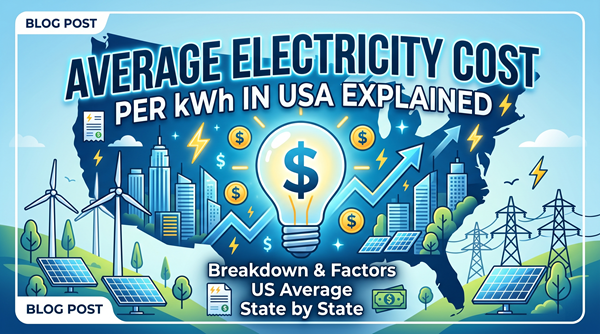
Right now, the national average for residential electricity sits at approximately 19.2 cents per kWh. If that sounds high, it is because it is. Just a few years ago, we were hovering around 15 or 16 cents. The jump reflects a massive shift in how the U.S. produces and moves energy. We are currently in the middle of a 'grid modernization' phase, which is a fancy way of saying we are replacing old, crumbling wires with smarter, more expensive ones.
🏆 Our Top Picks
Sense Energy Monitor
This device installs directly into your breaker panel and uses machine learning to identify every appliance in your home. It tells you exactly how much each device costs you in real-time. It is best for data-driven homeowners who want to hunt down 'vampire' loads.
Check Price on Amazon →Ecobee Smart Thermostat Premium
Equipped with a built-in air quality monitor and remote sensors, this thermostat excels at reducing HVAC runtime without sacrificing comfort. It integrates perfectly with Time-of-Use utility programs to pre-cool your home when rates are low.
Check Price on Amazon →Emporia Smart Plugs
These plugs allow you to monitor and schedule individual appliances from your phone. They are perfect for older appliances that do not have built-in energy-saving modes. One downside is they can be bulky in tight wall outlets.
Check Price on Amazon →Jackery Explorer 2000 Plus
A massive portable power station that can be used for 'peak shaving'—charging during cheap off-peak hours and powering your devices during expensive peak hours. It is a heavy unit, but the LiFePO4 battery lasts for years.
Check Price on Amazon →Philips Hue Smart LED Starter Kit
While more expensive than basic LEDs, these allow for precise scheduling and dimming, which significantly cuts lighting costs over time. The main drawback is the requirement for a 'Bridge' hub for full functionality.
Check Price on Amazon →However, that 19.2 cent figure is a bit like saying the average temperature in the U.S. is 55 degrees. It does not tell you much if you live in the frozen tundra of Maine or the deserts of Arizona. Electricity prices are hyper-local. Depending on where you live, you might be paying 11 cents or a staggering 45 cents.
Regional Price Breakdown
To give you a clearer picture, look at how these rates vary across the country. These are not just numbers; they represent the energy reality of different regions.
| Region/State | Avg Rate (cents/kWh) | Primary Driver |
|---|---|---|
| Hawaii | 46.1 | Isolated grid, high import costs |
| California | 32.4 | Wildfire mitigation and green mandates |
| Texas | 14.8 | Deregulated market, high wind output |
| Washington | 12.1 | Abundant hydroelectric power |
| New England | 28.9 | Natural gas pipeline constraints |
What most people miss is that these rates are not just about the fuel used to make the power. They include the cost of the poles, the wires, the billing software, and even the pensions of the people who retired from the power company twenty years ago.
What Actually Drives the Cost per kWh?
If you think it is just 'corporate greed,' you are only seeing part of the puzzle. There are three main components that make up that per-kWh price. Understanding these helps you see where your money goes.
1. Generation Costs
This is the cost of actually creating the electricity. Whether it is burning natural gas, splitting atoms in a nuclear plant, or catching rays with solar panels, someone has to pay for the fuel and the plant. In 2026, we are seeing a weird paradox: solar and wind are getting cheaper to build, but the 'backup' power needed when the sun goes down is getting more expensive.
2. Transmission and Distribution
This is the 'delivery fee' for your power. Think of it like the shipping cost on an online order. High-voltage lines (transmission) move power across states, while the smaller lines on your street (distribution) bring it to your door. This is currently the fastest-growing part of your bill. Why? Because our grid is old, and we are spending billions to make it 'smart' enough to handle electric cars and home batteries.
3. Regulatory and Environmental Fees
Depending on your state, you might see 'riders' or 'surcharges' on your bill. These pay for energy efficiency programs, low-income assistance, or carbon reduction goals. In states like California or New York, these fees can make up a significant chunk of the per-kWh rate.
The Rise of Time-of-Use (TOU) Rates
In 2026, the 'flat rate' is becoming a relic of the past. Most utilities have moved to Time-of-Use (TOU) pricing. This is where the cost per kWh changes based on the time of day. It is the 'Happy Hour' of the energy world, except the drinks are more expensive when you actually want them.
Under TOU, you might pay 12 cents per kWh at 2:00 AM when everyone is asleep, but 45 cents per kWh at 6:00 PM when you are trying to cook dinner and run the AC. This shift is designed to force you to change your behavior. If you can move your laundry or dishwasher run to the 'off-peak' hours, you can effectively lower your average cost without using less total energy. It is about being smart, not just being frugal.
How to Calculate Your True Cost
Do not just trust the 'Supply' line on your bill. To find your true cost per kWh, take your total bill amount (including all taxes and fees) and divide it by the total number of kWh you used that month. For example, if your bill is 200 dollars and you used 1,000 kWh, your true cost is 20 cents per kWh. Often, the 'advertised' rate is much lower than this 'all-in' rate. Knowing your all-in rate is the only way to accurately calculate if things like solar panels or home batteries actually make financial sense for you.
Practical Ways to Fight Back Against High Rates
You cannot control the utility company, but you can control how you interact with them. Here is how I suggest tackling high costs in 2026.
- Audit Your Standby Power: We call these 'vampire loads.' That old DVR or the printer you never use can pull 10-15 watts constantly. Over a year at 20 cents per kWh, that is 25 dollars just to keep a clock glowing.
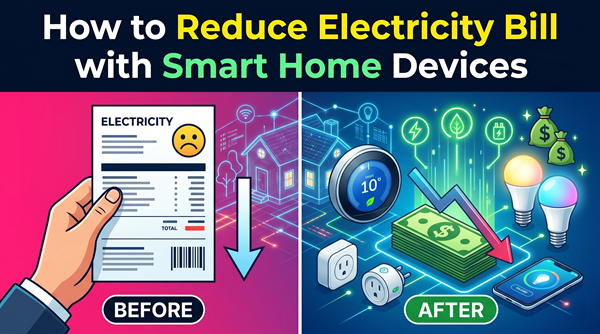
- Invest in a Smart Thermostat: Heating and cooling are usually 50 percent of your bill. A thermostat that knows when you are gone can pay for itself in six months.
- Switch to Heat Pump Technology: If you are still using electric resistance heat (baseboards) or an old AC, you are throwing money away. Modern heat pumps are 3 to 4 times more efficient.
- Check Your Insulation: No amount of cheap electricity can fix a house that leaks air like a sieve. Focus on the attic first; it is the biggest bang for your buck.
The Future of Electricity Costs
Looking ahead toward the end of the decade, do not expect rates to drop. The 'electrification of everything'—from stoves to trucks—means demand is skyrocketing. When demand goes up and the grid needs trillions in upgrades, prices generally follow. However, the tools we have to manage that cost are getting better. Home automation and local storage (batteries) are moving from 'luxury' to 'necessity' for the average homeowner who wants to keep their budget under control.
The bottom line? Stop thinking of electricity as a fixed cost. It is a variable commodity. The more you know about your specific rate structure and your home's 'leakage,' the more power you have over that monthly envelope.
Frequently Asked Questions
Why is my electric bill so high even when I use less power?
This is usually due to 'fixed charges' or 'delivery fees' that stay the same regardless of usage. Additionally, if your utility uses Time-of-Use rates, using power during peak hours can double or triple your cost per kWh.
Is solar still worth it with higher electricity rates?
Generally, yes. As the cost per kWh from the grid rises, the 'payback period' for solar panels gets shorter. In 2026, with rates averaging 19 cents, most solar installations pay for themselves in 6-8 years.
What is the cheapest time of day to use electricity?
For most of the U.S., 'off-peak' hours are between 11:00 PM and 6:00 AM. Some utilities also offer lower rates during the middle of the day if there is a high amount of solar production on the grid.