 By James Carter
Our Editorial Research & Methodology
The Real Reason Your Bill is Sky-High
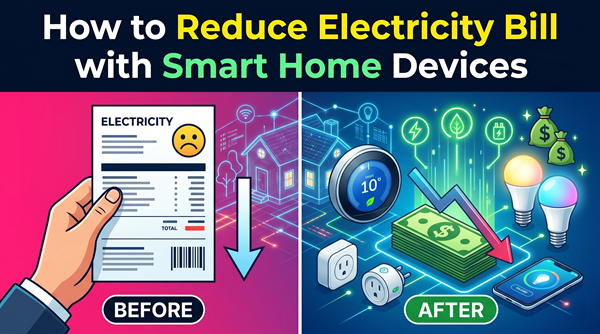
Let's be honest. Opening your utility bill lately feels like reading a horror novel. Energy prices in 2026 haven't exactly been kind to our wallets. Most people think saving electricity means sitting in the dark or shivering under three blankets in the winter. That is a myth. The real problem isn't your comfort; it is your home's lack of intelligence.
In my experience, the average house is incredibly wasteful. We leave lights on in empty rooms. We heat the living room while we are fast asleep in the bedroom. We let 'vampire' appliances suck power 24/7 just because they are plugged in. This is where smart home technology shifts from being a 'cool toy' to a financial necessity. You are not just buying gadgets; you are hiring a digital manager for your home's resources.
Here is the thing: you do not need to spend thousands of dollars upfront to see a difference. By targeting the biggest energy hogs first, you can see a return on your investment in months, not years. Let's break down exactly how to turn your home into a lean, mean, energy-saving machine.
The Heavy Lifter: Smart Thermostats
If you want to make a dent in your bill, you start with the HVAC system. Heating and cooling usually account for about 50 percent of a typical home's energy use. A traditional programmable thermostat is better than nothing, but it is still pretty dumb. It follows a schedule even if you are stuck at work or away for the weekend.
🏆 Our Top Picks
Ecobee Smart Thermostat Premium
This is the gold standard for HVAC control. It includes a zinc-bodied design and a high-quality air quality monitor. It excels because of its included remote sensor that prioritizes comfort in the rooms you actually use, rather than just the hallway. Best for families with multi-story homes.
Check Price on Amazon →Emporia Smart Home Energy Monitor
This device installs directly into your breaker panel to provide circuit-level data. It is the best tool for identifying exactly which appliance is spiking your bill. It provides real-time data and 24-hour history. Note: Requires professional installation for most users.
Check Price on Amazon →Lutron Caseta Deluxe Smart Dimmer Switch Kit
Lutron uses a proprietary 'Clear Connect' wireless tech that is more reliable than Wi-Fi. These switches don't require a neutral wire, making them perfect for older homes. They allow for complex scheduling and geofencing for your existing 'dumb' bulbs.
Check Price on Amazon →Eve Energy Smart Plug (Matter)
A top-tier smart plug that supports the Matter protocol and Thread networking. It provides incredibly accurate energy consumption tracking for whatever is plugged into it. It is best for those who want to kill phantom loads on high-end electronics. Limitation: It is slightly bulkier than some competitors.
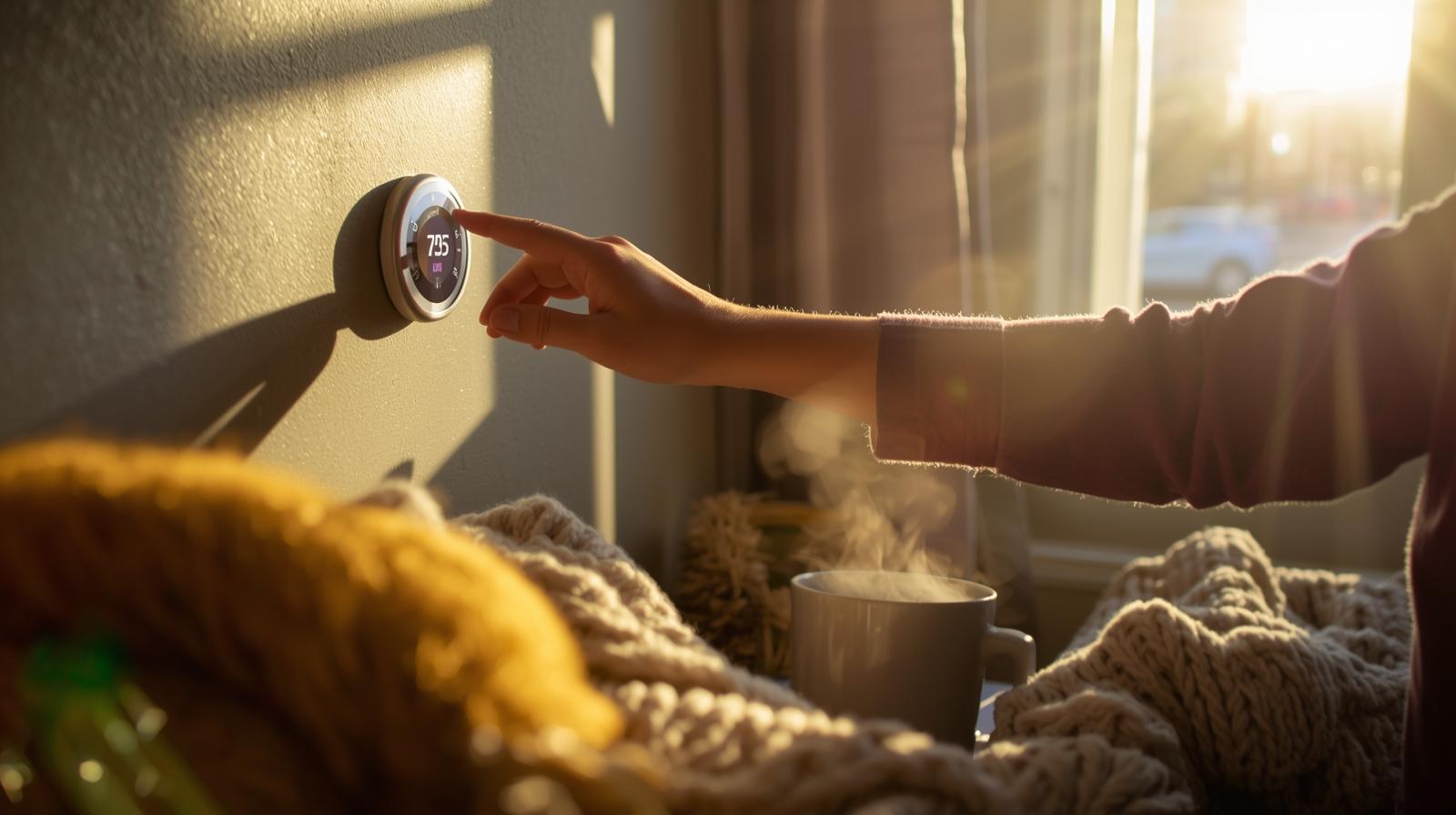
Check Price on Amazon →Smart thermostats change the game by using geofencing. This tech knows when your phone leaves the house and automatically shifts to an 'Eco' mode. When you are five miles from home, it kicks back on so the house is comfortable the moment you walk in. You are never paying to heat or cool an empty building.
Multi-Room Sensing
What most people miss is that one thermostat in the hallway cannot tell if your upstairs bedroom is a sauna. Modern systems use remote sensors. These tiny devices tell the main hub the temperature in specific rooms. If the nursery is too cold but the rest of the house is fine, the system adjusts intelligently rather than just blasting the furnace for the whole house.
Lighting: More Than Just Dimming
LED bulbs were the first step, but smart lighting is the leap. We have all walked through the house and found three lights on in rooms nobody has entered for hours. It is annoying and expensive. Smart switches and bulbs solve this through automation and sensors.
In my home, I use motion sensors in 'transition' areas like hallways, bathrooms, and the garage. If no movement is detected for five minutes, the lights kill themselves. It sounds simple, but over a year, those saved hours add up to significant cash. You can also set 'Away' modes that mimic your presence while you are on vacation, using far less power than leaving a porch light on for a week straight.
The Phantom Load Menace
Have you ever heard of 'vampire power'? It is the electricity your TV, game console, and coffee maker use even when they are 'off.' In 2026, with the sheer number of connected devices we own, this phantom load can account for up to 10 percent of your monthly bill. It is literally money disappearing for no reason.
Smart plugs are the silver bullet here. You can plug your entire entertainment center into a smart power strip. When you go to bed, a single command or a set schedule cuts the physical connection to the power grid. The devices aren't just 'off'; they are disconnected. This is especially useful for older appliances that are less energy-efficient than modern ones.
Smart Blinds: The Passive Powerhouse
This is the most underrated category in home automation. Your windows are basically thermal holes in your walls. In the summer, the sun bakes your interiors, forcing the AC to work overtime. In the winter, heat escapes through the glass. Smart blinds use light sensors and weather data to act as a thermal barrier.
On a hot July afternoon, your blinds can automatically close when the sun hits the south side of the house. This keeps the internal temperature stable without the AC ever clicking on. In the winter, they open during the day to let the sun heat your floors for free, then close at night to trap that warmth inside. It is passive energy management at its finest.
Monitoring: If You Can't Measure It, You Can't Manage It
The biggest hurdle to saving money is not knowing where it is going. Your utility bill is a lump sum that tells you nothing about your habits. Whole-home energy monitors, like those that clip onto your breaker box, give you a real-time 'speedometer' for your electricity use.
These devices use machine learning to identify the 'signature' of different appliances. It can tell you exactly how much it costs every time you run the dishwasher or how much your old fridge is costing you in efficiency losses. When you see a live dollar-per-hour readout on your phone, your behavior changes instantly. You start noticing that leaving the basement light on actually costs real money.
Comparison: Savings Potential by Device Category
| Device Category | Estimated Monthly Savings | Ease of Installation | Primary Benefit |
|---|---|---|---|
| Smart Thermostat | 15-25% | Moderate | HVAC Optimization |
| Smart Lighting | 5-10% | Easy | Eliminating Waste |
| Smart Plugs | 3-8% | Very Easy | Killing Phantom Loads |
| Smart Blinds | 10-15% | Difficult | Thermal Insulation |
| Energy Monitor | Variable (Behavioral) | Professional Needed | Data-Driven Decisions |
The Matter Revolution in 2026
We cannot talk about smart homes in 2026 without mentioning Matter. For years, the biggest headache was getting different brands to talk to each other. You had one app for lights and another for the thermostat. It was a mess. Now, with Matter 1.5 being the standard, everything works together seamlessly.
This interoperability is key for energy saving. Your smart security system can now tell your smart blinds and thermostat that the house is empty. You don't have to set three different 'Away' modes. One trigger handles everything. This 'ecosystem' approach is what finally makes the dream of a self-optimizing home a reality for regular people.
Practical Steps to Start Today
Don't try to do everything at once. Start with a smart thermostat; it has the highest ROI. Next, identify your 'vampire' electronics and put them on smart plugs. Finally, add motion sensors to the rooms where people (usually kids) always forget to flip the switch. Within three months, the devices will have paid for themselves, and from then on, it is pure profit staying in your bank account.
Frequently Asked Questions
Do smart home devices use a lot of electricity themselves?
No. Most smart devices use a negligible amount of power, often less than 1 watt in standby mode. The energy they save by managing larger appliances far outweighs their own consumption.
Is it worth getting smart devices if I rent my home?
Absolutely. Smart plugs, bulbs, and even some thermostats (like the Ecobee) are easy to install and remove. You can take your energy savings with you when you move.
Will these devices work if my internet goes down?
Most modern Matter-enabled devices will continue to follow their local schedules and sensor triggers even without an active internet connection, though you might lose remote phone control temporarily.