 By Olivia Brooks
Our Editorial Research & Methodology
The Magic Number for Winter Comfort
Most people think saving money in winter means shivering under three blankets while your breath mists in the living room. It does not have to be that way. After years of looking at energy bills and testing HVAC systems, I can tell you there is a sweet spot that balances your bank account and your comfort.
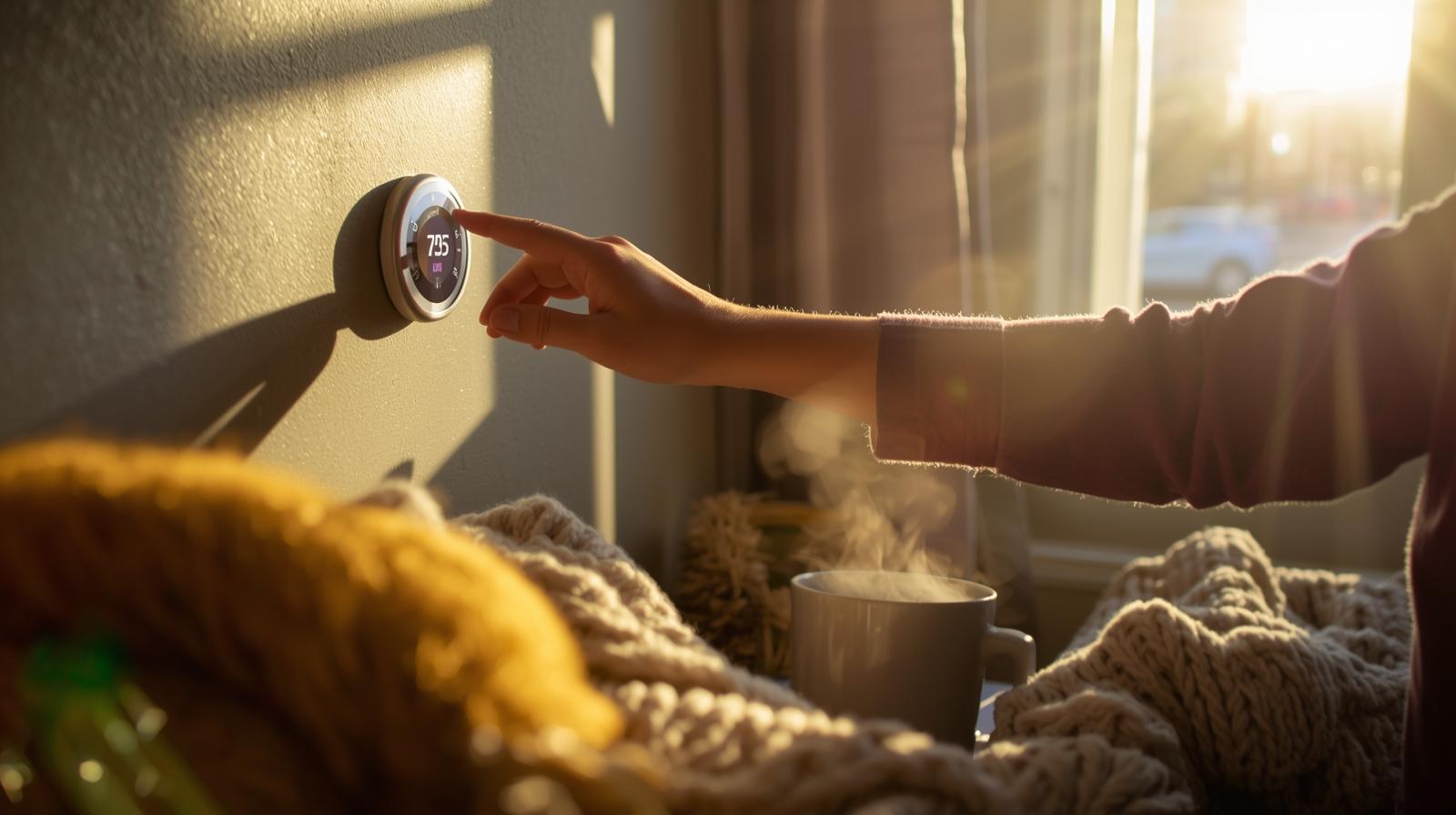
The magic number is 68 degrees Fahrenheit (20 degrees Celsius) while you are awake and at home. This is not just a random guess. It is the point where most modern heating systems operate at peak efficiency without making the indoor air feel like a refrigerator. When you keep your home at 68, you reduce the rate of heat loss through your walls and windows compared to keeping it at 72 or 75.
Here is the thing: every degree you turn the dial down can save you up to 3 percent on your heating bill. If you drop from 72 to 68, you are looking at a 12 percent reduction in energy use. In a world where energy prices in 2026 are anything but stable, that is real money back in your pocket.
Why 68 Degrees Works
Physics is the main reason. Heat naturally moves from warm areas to cold areas. The bigger the temperature difference between your living room and the freezing air outside, the faster the heat escapes. By keeping your home at 68, you slow down that escape. Your furnace or heat pump does not have to kick on as often to replace what was lost.
The 8-Degree Rule for Sleeping and Working
If you leave your thermostat at 68 all day and night, you are still leaving money on the table. You need to embrace the setback strategy. This means lowering the temperature when you do not need the heat as much. I call this the 8-degree rule.
🏆 Our Top Picks
Ecobee Smart Thermostat Premium
This is the gold standard for 2026. It features a built-in air quality monitor and a zinc body that feels premium. It includes a remote sensor to balance temperatures in rooms that stay too cold, making it perfect for larger homes.
Check Price on Amazon →Google Nest Learning Thermostat 4th Gen
The 4th Gen model excels at predictive heating. It uses AI to analyze your habits and the local weather to adjust settings before you even feel a chill. It is the best choice for those who want a set-it-and-forget-it experience.
Check Price on Amazon →Honeywell Home T9 Smart Thermostat
The T9 is built for multi-room focus. Its sensors track both temperature and humidity in different rooms, allowing the system to prioritize the areas you actually use. It is a robust, reliable choice for families.
Check Price on Amazon →Emerson Sensi Touch 2 Smart Thermostat
For those who want a traditional look with modern brains, the Sensi Touch 2 is excellent. It is very easy to install and has one of the most intuitive apps on the market. It does not require a C-wire in many setups, which is a huge plus for older homes.
Check Price on Amazon →Mysa Smart Thermostat for Electric Baseboard Heat
If you have high-voltage electric baseboard heaters, most smart thermostats will not work. Mysa is specifically designed for this. It brings modern scheduling and remote control to older heating systems, often saving users up to 26 percent.
Check Price on Amazon →When you go to bed, drop the temperature to 60 degrees. Most people actually sleep better in a cooler room. Your body temperature naturally dips at night, and a cool environment supports that cycle. If 60 feels too cold, start at 64 and work your way down over a week. You will be surprised how quickly you adjust when you have a good duvet.
The same rule applies when you head out for work. If the house is empty for eight hours, there is no reason to keep it at 68. Set it to 60. Some people worry that the heater has to work harder to warm the house back up later. That is a common myth. It takes far less energy to warm a cool house than it does to maintain a high temperature all day long.
Setting Your Winter Schedule
| Time of Day | Activity | Recommended Setting |
|---|---|---|
| 6:00 AM - 8:00 AM | Waking Up | 68°F |
| 8:00 AM - 4:00 PM | Away at Work | 60°F |
| 4:00 PM - 10:00 PM | Evening at Home | 68°F |
| 10:00 PM - 6:00 AM | Sleeping | 60°F |
Heat Pumps vs. Gas Furnaces: Different Rules Apply
In 2026, we are seeing more inverter-driven heat pumps than ever before. If you have one of these, the old advice of dropping the temperature by 10 degrees might actually hurt you. Traditional gas furnaces are like an on-off switch. They run at full blast until the goal is reached, then they stop.
Modern heat pumps are different. They like to sip energy slowly. If you drop the temperature too low, the heat pump might panic when you turn it back up. It might engage its backup electric resistance heat, which is incredibly expensive. For heat pump owners, I recommend a smaller setback. Try dropping only 3 or 4 degrees instead of 8. This keeps the system in its high-efficiency range.
The Recovery Time Factor
Recovery time is how long it takes your home to get back to 68 degrees. If you have a poorly insulated home, this can take a while. Smart thermostats in 2026 are great at calculating this. They look at the outdoor temperature and learn how fast your specific home warms up. They will start the heater at 3:30 PM so it is exactly 68 by the time you walk in at 4:00 PM.
Humidity: The Invisible Heater
Dry air is the enemy of winter comfort. When the air is dry, moisture evaporates off your skin faster, which makes you feel cold even if the thermostat says 70. This is why 68 degrees in a humid house feels warmer than 72 degrees in a dry one.
If you find yourself constantly bumping up the heat, check your humidity levels. You want your home to be between 30 and 45 percent humidity in the winter. Use a humidifier or even just leave the door open when you shower. By adding a little moisture to the air, you can keep the thermostat at 68 and feel perfectly cozy. It is a simple trick that most people completely overlook.
The Dangers of Too Much Humidity
Do not go overboard. If your windows are dripping with condensation, your humidity is too high. This can lead to mold growth behind furniture or in corners. Keep a cheap hygrometer in your main living area to monitor the levels. It is a small investment that protects your health and your walls.
Smart Features You Should Actually Use in 2026
We have moved past basic programmable thermostats. Today, we have Matter-enabled devices that talk to everything in your home. One of the best features to use is geofencing. This uses your phones location to tell the thermostat when you are coming home. If you get stuck in traffic, the heat stays low, saving you money automatically.
Another feature is occupancy sensing. If you are spending the whole day in your home office, why heat the guest bedroom and the basement? Remote sensors can tell the thermostat to focus on the room you are actually in. This is much more efficient than trying to heat the entire square footage of the house to a uniform temperature.
Demand Response Programs
Many utility companies now offer rewards if you let them slightly adjust your thermostat during peak grid stress. In 2026, these programs are very common. Usually, they only nudge the temp by a degree or two for an hour. In exchange, you get credits on your bill. It is worth looking into if you want to shave another few dollars off your monthly costs.
Common Mistakes That Kill Your Savings
I see people making the same mistakes every winter. The biggest one is cranking the thermostat to 85 degrees because they just got home and the house is cold. Look, your heater is not a car accelerator. It does not pump out hotter air just because you set the target higher. It just runs longer. Setting it to 85 will not warm the house any faster than setting it to 68, but it will definitely waste energy if you forget to turn it back down.
Another mistake is ignoring the drafts. You can have the best thermostat in the world, but if your front door has a half-inch gap at the bottom, you are literally heating the neighborhood. Use weatherstripping. Use door snakes. These cheap fixes make your thermostats job much easier.
The Ceiling Fan Secret
Most people think fans are only for summer. Most ceiling fans have a small switch on the motor housing that reverses the blade direction. In winter, you want the blades to spin clockwise at a low speed. This creates an updraft that pushes the warm air trapped at the ceiling back down to the floor where you are sitting. It is a game changer for rooms with high ceilings.
Beyond the Thermostat: Sealing the Envelope
If you really want to master winter energy savings, you have to look at the whole house. The thermostat is just the brain; the house is the body. If the body is leaking heat, the brain has to work overtime. Check your attic insulation. Over time, old fiberglass batts can settle and lose their effectiveness. Adding a fresh layer of blown-in cellulose can pay for itself in just two or three seasons.
Windows are another weak point. If you cannot afford new triple-pane windows, use heavy thermal curtains. Close them as soon as the sun goes down. This creates an extra layer of insulation that keeps the cold glass from sucking the heat out of your room. During the day, open the curtains on the south side of your house to let the sun provide free radiant heat.
The Importance of HVAC Maintenance
A dirty filter can increase your energy use by 15 percent. It forces the blower motor to work much harder to move air. Change your filters every 30 to 90 days depending on if you have pets. Also, make sure your outdoor unit is clear of snow and debris. If a heat pump is buried in a snowbank, it cannot extract heat from the air efficiently. A little bit of manual labor goes a long way in keeping your bills low.
Frequently Asked Questions
Is it cheaper to leave the heat on all day?
No. It is a myth that reheating a home uses more energy than maintaining a constant temperature. Turning the heat down when you are away always saves more energy.
What is the lowest safe temperature for a house in winter?
To prevent pipes from freezing, you should never set your thermostat below 55 degrees Fahrenheit, especially if your pipes are located in exterior walls.
Does a smart thermostat really save money?
Yes, typically between 8 and 12 percent on heating costs. The savings come from automated setbacks and learning your schedule so you never heat an empty house.