 By Olivia Brooks
Our Editorial Research & Methodology
The 2026 Electricity Landscape: Why Your Bill is Changing
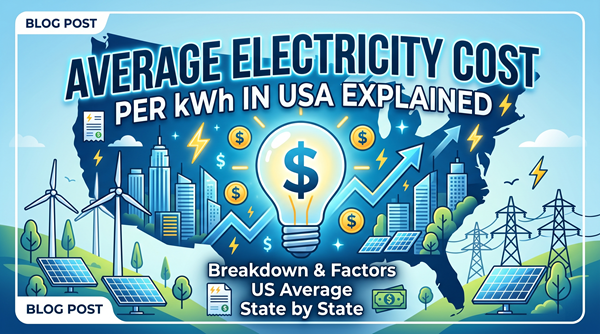
If you have opened your utility bill lately and felt a bit of sticker shock, you are not alone. As of February 2026, the national average for residential electricity has climbed to roughly 18.2 cents per kilowatt-hour (kWh). But here is the thing: that number is almost meaningless depending on where you park your car at night.
Electricity pricing in the United States is a patchwork quilt of regulation, geography, and infrastructure age. While someone in Seattle might be paying pennies for hydropower, a homeowner in San Diego is likely paying four times that amount. Understanding these gaps is the first step to taking control of your home budget.
In this guide, we are going to look past the surface-level averages. We will dive into why some states are seeing massive price hikes while others remain stable, and more importantly, what you can actually do about it besides sitting in the dark.
The High-Cost Leaders: Why Some States Pay a Premium
It is no surprise that Hawaii continues to lead the pack with the most expensive electricity in the nation. In early 2026, Hawaiians are seeing rates north of 48 cents per kWh. Because the islands rely heavily on imported fuel and isolated microgrids, the cost of keeping the lights on is inherently higher than on the mainland.
🏆 Our Top Picks
Sense Energy Monitor with Solar Tracking
This device installs directly into your electrical panel and uses machine learning to identify every appliance in your home. It shows you real-time costs on your phone, helping you find the 'vampire loads' that are draining your wallet. It is best for data-driven homeowners who want to see exactly where every cent is going.
Check Price on Amazon →Ecobee Smart Thermostat Premium
The Ecobee Premium features a built-in air quality monitor and works seamlessly with Time-of-Use utility schedules. It automatically shifts your heavy cooling or heating to off-peak hours when electricity is cheapest. One downside is that it requires a C-wire for installation, which older homes might lack.
Check Price on Amazon →Jackery Explorer 2000 Plus Portable Power Station
With LiFePO4 battery technology, this unit is perfect for 'peak shaving'—charging during cheap night hours and powering your devices during expensive evening peaks. It offers 2kWh of capacity and can be expanded. It is heavy, but the long-term savings and backup capability make it a solid investment for high-rate areas.
Check Price on Amazon →Emporia Smart Plugs (4-Pack)
These are the most affordable way to start monitoring individual appliances. They handle up to 15A and provide detailed energy usage reports via an app. They are perfect for older refrigerators or space heaters that might be using more power than you realize. Note that they only work on 2.4GHz Wi-Fi networks.
Check Price on Amazon →California and Massachusetts are not far behind. California, in particular, has seen rates surge due to massive investments in grid hardening to prevent wildfires and the transition to a more complex green energy mix. In many parts of the Golden State, 34 to 38 cents per kWh is the new normal.
What most people miss is that these high rates are often tied to policy goals. These states are aggressively pushing for decarbonization. While that is great for the planet long-term, the short-term reality is that consumers are footing the bill for new transmission lines and massive battery storage facilities.
The Budget-Friendly Bastions: Where Power is Cheap
On the flip side, states like Washington, Idaho, and Louisiana continue to enjoy some of the lowest rates in the country. Washington and Idaho benefit from a massive legacy of hydroelectric dams. Once these dams are built, the marginal cost of producing a kilowatt of power is incredibly low.
Louisiana and Oklahoma benefit from a different factor: proximity to natural gas production and a less complex regulatory environment. In these states, you might still see rates as low as 11 to 13 cents per kWh. If you are moving from Boston to New Orleans, your air conditioning bill might actually go down, even though you are using it twice as much.
However, even these low-cost states are starting to see upward pressure. As the national grid becomes more interconnected, local surpluses are often sold to neighboring high-cost regions, which can slowly pull local prices upward over time.
2026 State-by-State Electricity Cost Comparison
To give you a clear picture of where your state stands, look at the table below. These figures represent the average residential retail price per kWh as of February 2026. Keep in mind that your specific city or utility provider may vary.
| Region/State | Avg. Rate (cents/kWh) | Typical Monthly Bill |
|---|---|---|
| Hawaii | 48.2 | $245 |
| California | 35.1 | $195 |
| Massachusetts | 31.4 | $188 |
| New York | 24.8 | $162 |
| Texas | 15.4 | $175 |
| Florida | 16.2 | $182 |
| Washington | 11.8 | $115 |
| Louisiana | 12.1 | $145 |
Notice the difference in the "Typical Monthly Bill" column. States with lower rates often have higher usage due to climate. For example, a Texas home uses significantly more power for cooling than a home in Maine, which can make the total bill feel high even if the rate per unit is relatively low.
Understanding the "Delivery" vs. "Supply" Trap
If you look closely at your bill, you will see it is split into two main parts: Supply and Delivery. In my experience, this is where most consumers get confused. The supply charge is what you pay for the actual electricity generated. The delivery charge is what you pay the utility to maintain the wires, poles, and transformers that get that power to your house.
In many deregulated states like Pennsylvania or Illinois, you can shop for your supply. You can pick a provider that uses 100 percent wind power or one that offers a fixed rate for three years. But you cannot shop for delivery. That is a monopoly held by your local utility.
In 2026, delivery charges are rising faster than supply charges. Why? Because our grid is old. Replacing a 50-year-old transformer is expensive, and those costs are passed directly to you. Even if the price of natural gas or solar power drops, your bill might still go up because the "delivery" portion is ballooning.
The Rise of Time-of-Use (TOU) Rates
By now, most major utilities have moved toward Time-of-Use (TOU) pricing. This is a system where electricity costs more when everyone is using it (usually 4 PM to 9 PM) and less when demand is low (late at night). In 2026, this is no longer optional in many states; it is the default.
If you run your dishwasher at 6 PM in a TOU zone, you might be paying 45 cents per kWh. If you wait until 11 PM, that same load of dishes might cost you 15 cents. This shift requires a change in mindset. You have to start thinking of your home as a thermal battery. Cool it down in the morning when power is cheap, and let the temperature rise slightly during the expensive evening peak.
Smart home technology has become essential here. You do not want to be manually flipping switches at midnight. You want a system that knows the rates and adjusts your water heater and HVAC system automatically.
Hidden Factors Driving Your Bill Higher
Beyond just the state you live in, several hidden factors are pushing prices up in 2026. First is the massive growth of data centers. With the AI boom, data centers are consuming record amounts of power, often competing with residential areas for the same supply.
Second is the "Electrification of Everything." As more people switch to electric vehicles (EVs) and heat pumps, the total demand on the grid increases. While this is more efficient overall, it requires the utility to upgrade local substations, which adds to those delivery fees we talked about.
Finally, there is grid resilience. With more frequent extreme weather events, utilities are spending billions on "undergrounding" lines and building backup systems. It is a classic case of paying now to avoid a total blackout later, but it certainly does not make the monthly bill any easier to swallow.
Practical Steps to Lower Your Costs Right Now
You cannot change the laws in your state overnight, but you can change how your home interacts with the grid. Start with a home energy audit. Many utilities offer these for free. They will use thermal cameras to show you exactly where your expensive heated or cooled air is leaking out.
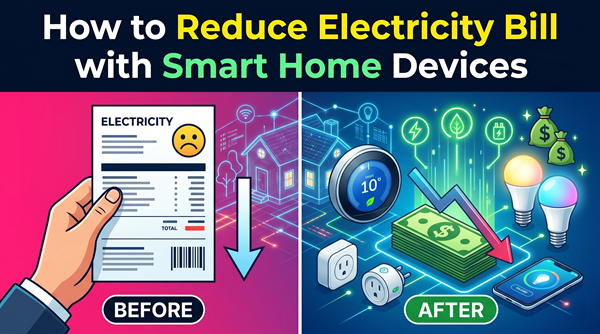
Next, look at your "vampire loads." These are devices that suck power even when they are turned off. In 2026, the average home has dozens of connected devices, from smart speakers to coffee makers. Using smart power strips that cut power completely when a device is in standby can save you $10 to $20 a month.
Lastly, consider a smart thermostat. This is the single most effective tool for fighting high electricity costs. By optimizing your heating and cooling based on when you are actually home and what the current utility rates are, these devices usually pay for themselves in less than a year.
The Future: What to Expect by 2030
Looking ahead, the volatility in electricity pricing is likely to continue. As we move away from coal and toward a mix of solar, wind, and nuclear, the "fuel" becomes free, but the "machinery" remains expensive. We will likely see a future where the actual energy is very cheap, but the access to a reliable grid is a premium service.
Community solar programs are also expanding. These allow you to "subscribe" to a local solar farm and receive credits on your bill, even if you cannot put panels on your own roof. In 2026, this has become a popular way for renters to lower their costs without a major investment.
The bottom line? Electricity is no longer a "set it and forget it" utility. It is a dynamic market. The people who pay the least in the coming years will be those who stay informed and use technology to outsmart the grid.
Frequently Asked Questions
Which state has the cheapest electricity in 2026?
Washington state consistently offers the lowest residential rates, averaging around 11.8 cents per kWh, thanks to its extensive hydroelectric infrastructure.
Why is my electricity bill higher even if I use less power?
This is usually due to rising 'delivery' or 'distribution' fees. Utilities are increasing these fixed costs to pay for grid modernization and wildfire prevention, regardless of your actual energy consumption.
Are solar panels still worth it with current electricity rates?
In high-cost states like California or Massachusetts, solar panels often pay for themselves in 5-7 years. In low-cost states, the ROI is longer, but rising rates are making solar more attractive nationwide.