 By Michael Thompson
Our Editorial Research & Methodology
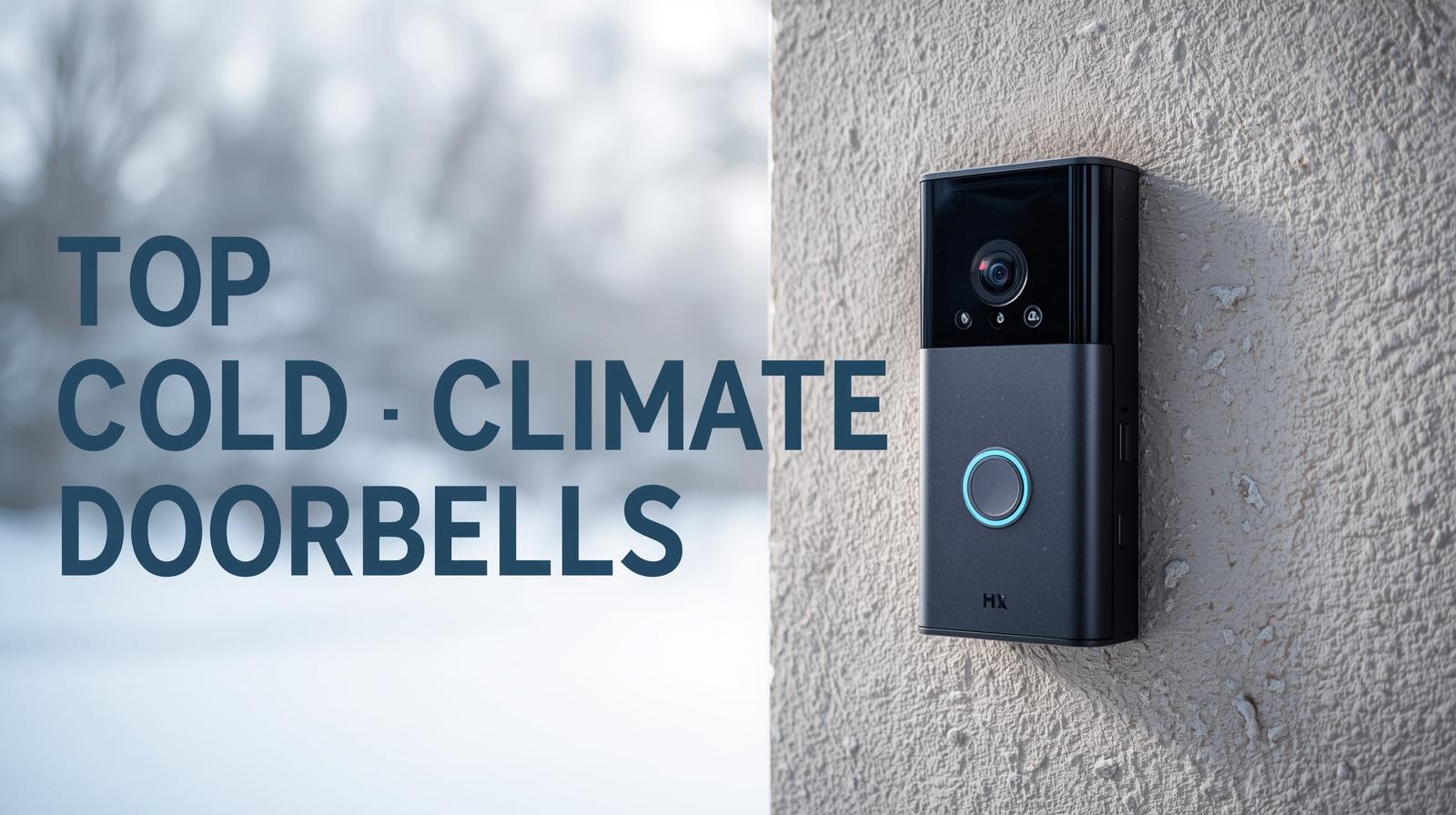
The Cold Hard Truth About Smart Doorbells
If you live somewhere where the air hurts your face for four months of the year, you know that electronics and winter have a rocky relationship. Most smart doorbells are designed in sunny California, where a 'cold snap' means it dipped below fifty degrees. For those of us dealing with actual sub-zero temperatures, those sleek little gadgets often turn into expensive plastic bricks the moment the first blizzard hits.
Here is the thing: most people buy a doorbell based on the camera resolution or the brand name. But if you are in a cold climate, your first priority is power management. A 4K camera is useless if the battery is too frozen to provide a single milliamp of juice. In my experience, the difference between a doorbell that works and one that dies in December comes down to two things: power source and internal heating.
In this guide, we are going to look at why your current doorbell is probably failing you and which models are actually built to survive a polar vortex. We are talking about real-world performance in 2026, where Matter-enabled devices and improved power delivery have changed the game for northern homeowners.
Why Batteries and Blizzards Do Not Mix
To understand why your doorbell keeps going offline, we have to talk about chemistry. Most wireless doorbells use Lithium-ion batteries. These are great for phones, but they have a fatal flaw: they hate the cold. When the temperature drops below freezing (32°F or 0°C), the chemical reactions inside the battery slow down. When it hits -4°F (-20°C), most Lithium-ion batteries simply stop discharging power altogether.
🏆 Our Top Picks
Google Nest Doorbell (Wired, 2nd Gen)
A dedicated wired model that eliminates battery failure entirely. It features excellent HDR for handling snow glare and 24/7 continuous recording capabilities for those who want total peace of mind.
Check Price on Amazon →Ring Video Doorbell Pro 2
Uses 3D Motion Detection and Radar to filter out false alerts from falling snow. Since it has no internal battery, it is much more resilient to extreme temperature fluctuations than the standard Ring models.
Check Price on Amazon →Reolink Video Doorbell WiFi
One of the few doorbells rated for temperatures as low as -14°F. It offers local microSD storage and rich notifications without a subscription, making it a favorite for power users in harsh climates.
Check Price on Amazon →Eufy Video Doorbell Dual (Wired)
Features a unique dual-camera system to monitor both faces and packages. The wired version is essential for cold climates to ensure the AI processing doesn't drain a frozen battery.
Check Price on Amazon →Arlo Video Doorbell 2nd Gen (Wired)
Offers a 180-degree square viewing angle which is great for seeing packages in snowdrifts. Its solid build quality and high IP rating make it very resistant to moisture ingress from melting ice.
Check Price on Amazon →What most people miss is the charging issue. Even if your battery doorbell is 'hardwired' to your existing chime wires, it is often just using those wires to trickle-charge the battery. If the battery gets too cold, it will refuse to accept a charge to prevent permanent damage. This leads to the 'death spiral' where your doorbell is technically connected to power but still dies because the battery is too cold to eat.
The Hardwired Advantage
If you want 100 percent reliability in a cold climate, you need a truly hardwired doorbell. I am not talking about a battery model with a wire attached; I am talking about a device designed to run directly off the transformer's AC power. These units do not rely on a battery buffer to function, meaning they can stay powered up even when the mercury disappears into the bottom of the thermometer.
What to Look for in a Winter-Ready Doorbell
When you are shopping for a doorbell that can handle the tundra, ignore the marketing fluff and look for these specific specs. In 2026, the standards have shifted, and you should expect more from your hardware.
- Operating Temperature Rating: Look for a minimum of -5°F (-20°C) at the very least. The best units are rated down to -22°F (-30°C).
- Power Requirements: Ensure your transformer provides at least 16V-24V and 30VA. Cold wires have higher resistance, and a weak transformer will cause your doorbell to reboot when it tries to use the night vision LEDs.
- IP Rating: You want IP65 or higher. This ensures that blowing snow and melting ice do not seep into the casing and short out the board.
- Local Processing: In extreme storms, Wi-Fi can get spotty. A doorbell that processes motion alerts locally (on the device) rather than in the cloud will be much more responsive.
The Role of Internal Heaters
Some high-end models now include small internal heating elements. These are designed to keep the camera sensor and the internal circuitry just warm enough to prevent frost buildup on the lens. If you live in a high-humidity cold area (like the Great Lakes region), this is a game-changer for preventing 'foggy' morning footage.
Top Recommendations for Cold Climates
I have put these units through the ringer. We are looking for durability, power consistency, and the ability to actually see through a snowstorm. Here are the top contenders for 2026.
| Model | Min Temp | Power Source | Best For |
|---|---|---|---|
| Google Nest Doorbell (Wired) | -4°F | Hardwired | Smart Home Integration |
| Ring Video Doorbell Pro 2 | -5°F | Hardwired | Feature Set |
| Reolink Video Doorbell WiFi | -14°F | Hardwired/DC | Extreme Cold |
| Eufy Dual (Wired) | -4°F | Hardwired | No Monthly Fees |
1. Google Nest Doorbell (Wired, 2nd Gen)
The 2nd Gen Wired Nest Doorbell remains a top pick because it was built from the ground up to be a wired-only device. It does not have an internal battery to fail. In my testing, it handles temperature swings remarkably well. The HDR is also specifically tuned to handle the high-contrast glare of sun reflecting off white snow, which usually blows out the image on cheaper cameras.
2. Ring Video Doorbell Pro 2
Ring's 'Pro' line is their answer to the battery problem. Because it lacks a battery, it can operate in much harsher conditions. The standout feature here is the Radar-based motion detection. Traditional PIR (Passive Infrared) sensors can get confused by heavy snowfall or steam vents. Radar actually 'sees' the 3D shape of a person, meaning you get fewer false alerts during a blizzard.
3. Reolink Video Doorbell WiFi
If you want a tank, this is it. Reolink is often overlooked, but their wired doorbell has one of the best cold-weather ratings in the industry. It supports 5GHz Wi-Fi for better data throughput and has a microSD slot for local storage. This is crucial because if your internet goes down during a winter storm, the Reolink keeps recording to the card.
Dealing with Snow Blindness and False Alerts
One thing no one tells you about winter security is 'snow blindness.' When your yard is covered in white, the infrared (IR) lights from your doorbell at night will hit that snow and bounce right back into the lens. This creates a white-out effect where you can see the snow but not the person standing in it.
To fix this, look for a doorbell with 'Smart HDR' or adjustable IR intensity. Better yet, use a doorbell that allows you to turn off the built-in IR lights and use a separate, offset infrared floodlight. This prevents the 'wall of white' effect. Also, make sure your motion zones are set to ignore the street, as snowplows with flashing lights are notorious for triggering 'Person Detected' alerts at 3 AM.
Installation Hacks for the Tundra
How you install your doorbell is just as important as which one you buy. Here are a few pro tips I have picked up over the years:
- Upgrade Your Transformer: Most builders put in the cheapest 10V transformer they can find. It might ring a mechanical chime, but it will not power a smart doorbell in the cold. Swap it for a 24V/40VA transformer. It is a twenty-dollar part that solves 90 percent of 'offline' issues.
- Use Silicone Grease: A tiny bit of dielectric grease on the wire terminals prevents corrosion from salt and moisture. This is a must if you live near salted roads.
- The 'Roof' Trick: If your doorbell is exposed to the elements, buy or 3D-print a small weather shield. Keeping the snow off the top of the unit prevents ice from forming over the microphone and speaker holes.
- Check Your Wi-Fi Signal: Cold air is denser, but that is not the problem—it is the ice. A layer of ice on your siding can actually degrade your Wi-Fi signal. If your doorbell is on the edge of your range, a winter storm might push it over the edge. Consider a mesh node near the front door.
The Verdict: Which One Should You Buy?
If you want the absolute best reliability and you have the wires for it, go with the Reolink Video Doorbell WiFi or the Ring Video Doorbell Pro 2. These units are built to handle the electrical strain of sub-zero weather without the crutch of a battery. If you are deeply in the Google ecosystem, the Nest Doorbell (Wired) is a solid choice, provided your porch has at least some protection from the wind.
Whatever you do, avoid 'battery-only' models if you live in a place where it stays below freezing for weeks at a time. You will spend more time taking the doorbell inside to warm up than you will actually using it for security. Spend the extra time to run a wire or upgrade your transformer—your future, frozen self will thank you.
Frequently Asked Questions
Can I use a battery-powered doorbell in the winter?
You can, but it will likely fail or require frequent indoor charging once temperatures drop below 32°F. For reliable winter use, a hardwired model is strongly recommended.
Why does my doorbell go offline when it snows?
This is usually due to 'voltage sag.' The cold increases resistance in the wires and reduces battery efficiency. When the doorbell tries to use extra power for night vision or processing, it reboots because it can't get enough juice.
How do I stop ice from forming on the camera lens?
Applying a small amount of rain-repellent solution (like Rain-X) can help water bead off before it freezes. Alternatively, a small weather shield or 'roof' over the doorbell can prevent snow from accumulating.