 By Alex Morgan
Our Editorial Research & Methodology
The Reality of Smart Heating in 2026
We have all been there. You wake up in a freezing house because you forgot to turn the heat up, or you realize halfway to work that you left the radiators blasting in an empty living room. It is annoying, and it is expensive. This is where the Bosch Smart Home Thermostat Controller system comes in. It is not just a gadget; it is a way to stop thinking about your heating entirely.
In 2026, smart home tech has moved past the 'cool toy' phase. We now demand systems that actually work, respect our privacy, and do not require a degree in computer science to install. Bosch has spent years refining their ecosystem to meet these exact needs. They have focused on local control and reliability rather than just flashy app features.
If you are looking to take control of your home climate, you need to understand how the Bosch system pieces together. It is a modular approach. You start with a brain, add some sensors, and suddenly your house is thinking for itself. Let's break down why this specific system is currently leading the pack for serious homeowners.
The Brain: Smart Home Controller II
Everything starts with the Smart Home Controller II. Think of this as the conductor of an orchestra. Without it, your smart thermostats are just fancy-looking knobs. This little white box plugs into your router and talks to every Bosch device in your home. What makes it special in 2026 is its speed and its commitment to local processing.
Most smart home brands send your data to the cloud every time you change the temperature. Bosch does not do that. The Controller II keeps your data inside your four walls. This means if your internet goes down, your heating still works. It also means your daily habits are not being sold to the highest bidder. It is a privacy-first approach that is becoming rare these days.
The Controller II also supports the latest Matter standards. This is a big deal. It means you can mix and match Bosch gear with Apple Home, Google Home, or Amazon Alexa without any headaches. It is the bridge that makes your smart home actually feel smart instead of fragmented.
The Radiator Thermostat II: Precision at the Source
If the controller is the brain, the Radiator Thermostat II units are the hands. These devices replace your old manual valves. They look sleek, but the real magic is inside. They use high-precision sensors to measure the temperature right at the radiator and adjust the flow of hot water in real-time.
🏆 Our Top Picks
Bosch Smart Home Controller II
The essential hub for the entire system. It offers local data storage for maximum privacy and supports the Matter standard for cross-platform compatibility. It is fast, secure, and the most reliable way to manage a smart home in 2026.
Check Price on Amazon →Bosch Smart Home Radiator Thermostat II
A high-precision valve controller with a clear LED display and tactile dial. It features adaptive heating and long battery life. Best for those wanting room-by-room temperature control without a subscription.
Check Price on Amazon →Bosch Smart Home Room Thermostat II (Wireless)
A portable wall-mounted unit that measures temperature and humidity exactly where you are. It solves the problem of 'heat pockets' near radiators and provides a convenient physical interface for the whole family.
Check Price on Amazon →Bosch Smart Home Door/Window Contact II
A slim sensor that automatically turns off your heating when a window is opened. It is the most effective way to prevent energy waste and can also double as part of a home security system.
Check Price on Amazon →One thing most people miss is the 'Adaptive Heating' feature. Over the first few days, the thermostat learns how fast your specific room heats up. It figures out that the kitchen warms up quickly because of the oven, while the corner bedroom takes longer. It then adjusts its schedule so every room hits the target temperature exactly when you want it to.
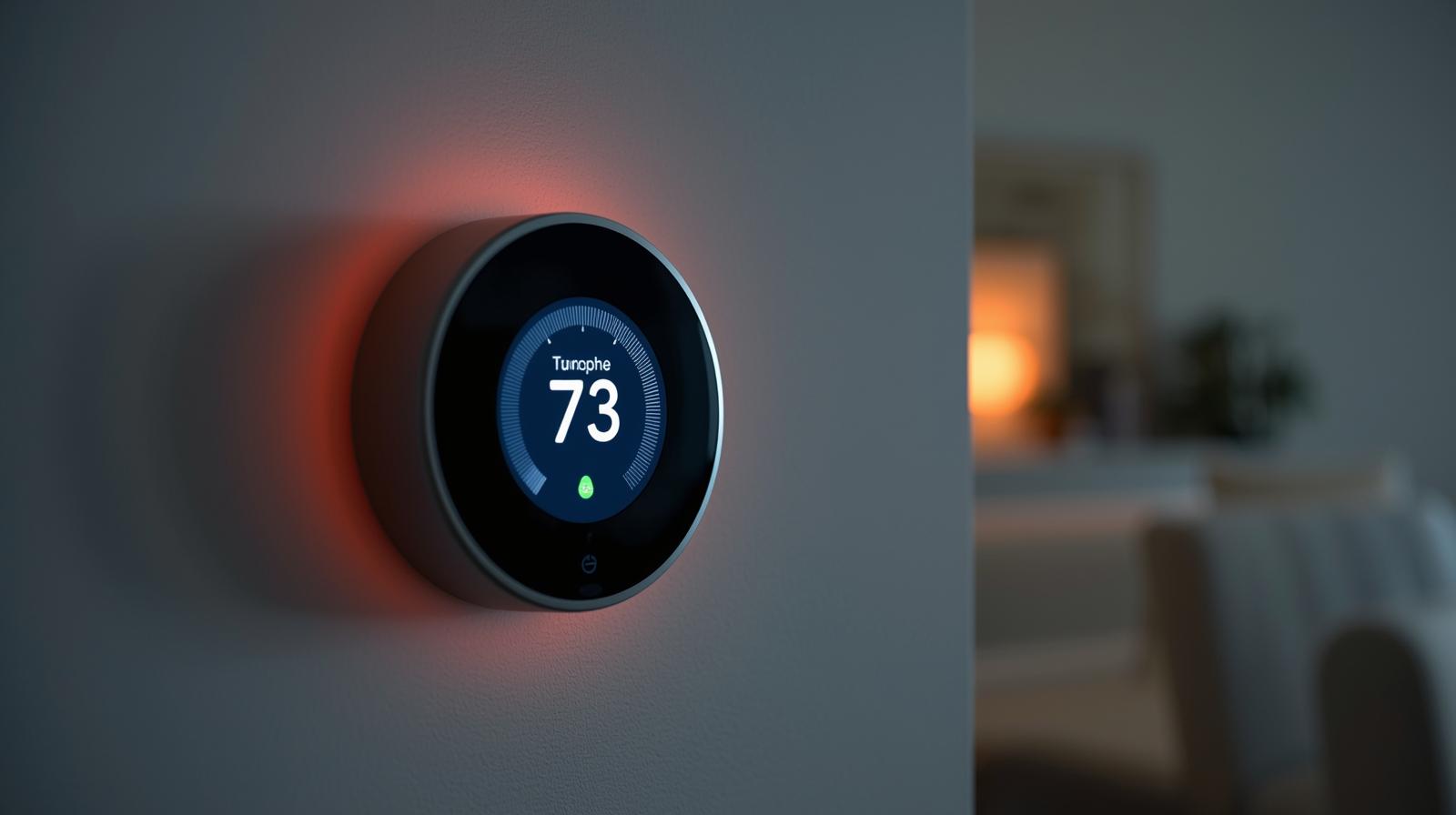
The build quality is classic Bosch. The turn-dial feels solid, and the multicolored LED ring gives you instant visual feedback. Blue means it is cooling down, red means it is heating up. It is simple, intuitive, and looks great on any radiator. Plus, the battery life has been pushed to nearly three years now, so you are not constantly swapping out AAs.
Why Room Thermostats Still Matter
You might wonder why you need a wall-mounted Room Thermostat II if you already have valves on your radiators. Here is the thing: radiators are often tucked behind sofas or under curtains. This creates a heat pocket. The radiator thinks the room is 22 degrees, but you are shivering on the couch at 18 degrees.
A wall-mounted thermostat acts as the 'true' reference point. You place it where you actually sit. It tells the radiator valves to keep going until the middle of the room is comfortable. It also gives you a central point to boost the heat or check the humidity without pulling out your phone. For larger rooms, this is not an optional extra; it is a necessity for actual comfort.
The Hidden Power of Window Sensors
The biggest waste of money in any home is heating a room with an open window. We have all done it. You open the window for some fresh air and forget to turn the radiator off. The thermostat senses the cold air, thinks the room is freezing, and opens the valve full blast. You are literally burning money.
Bosch solves this with the Door/Window Contact II. These tiny sensors tell the controller the moment a window is opened. The controller then tells the radiator in that specific room to shut down immediately. Once you close the window, the heat kicks back in. It is a seamless loop that can save you up to 15 percent on your heating bill alone.
Comparison: Bosch vs. The Competition
When you are looking at smart heating, you are likely comparing Bosch to brands like Tado or Nest. Here is how they stack up in the current market.
| Feature | Bosch Smart Home | Tado V3+ / X | Google Nest |
|---|---|---|---|
| Data Privacy | Local Storage | Cloud Based | Cloud Based |
| Subscription Fees | None | Required for Auto-Assist | None |
| Matter Support | Full Support | Partial Support | Full Support |
| Installation | DIY Friendly | DIY Friendly | Professional Recommended |
The standout difference is the lack of a subscription. Many competitors lock their best features—like geofencing or window detection—behind a monthly paywall. With Bosch, you buy the hardware, and you own the features. In my experience, this makes the higher upfront cost much easier to swallow over five years.
Installation: Can You Actually Do It Yourself?
The short answer is yes. You do not need to drain your heating system or touch any pipes. The Radiator Thermostat II simply screws onto the existing valve base. Bosch includes several adapters in the box, so whether you have Danfoss, M30, or something obscure, it usually fits right out of the box.
The app walks you through the process with step-by-step videos. It even handles the 'calibration' phase where the thermostat learns the travel distance of your valve pin. If you can change a lightbulb, you can install this system. The only exception is the wired 230V Room Thermostat for underfloor heating—that one usually requires an electrician to ensure the wiring is safe.
The Role of Geofencing and Automation
Geofencing is the 'magic' part of a smart home. By using your phone's GPS, the Bosch system knows when the last person has left the house. It then drops the temperature to an 'Eco' level. When it detects you are five miles from home on your way back, it ramps the heat back up so the house is toasty when you walk through the door.
But you can go deeper. In the Bosch app, you can create 'Scenarios.' For example, a 'Good Night' scenario could turn off all the lights, lock the smart door lock, and drop the bedroom temperature to exactly 17 degrees for optimal sleep. This level of integration is why people choose the Bosch ecosystem over standalone gadgets.
Advanced Features: Limescale and Child Locks
It is the little things that show Bosch's engineering heritage. For instance, the thermostats have an automatic limescale protection feature. Once a week, they fully open and close the valve to prevent calcium buildup. This prevents your valves from seizing up during the summer months when the heating is off.
Then there is the child lock. If you have toddlers, you know they love turning dials. You can disable the physical controls on the thermostats via the app. This prevents your two-year-old from turning the nursery into a sauna at 3 AM. It is a small detail, but it is one you will appreciate every single day.
The Impact of Matter 1.4 and Beyond
As of early 2026, the Matter protocol has matured significantly. Bosch was an early adopter, and it shows. Their devices now act as 'Thread routers' in some cases, strengthening the mesh network of your entire smart home. This means the more Bosch devices you add, the more stable your whole system becomes.
This interoperability means you are not locked into the Bosch app forever. If you prefer the interface of Apple Home or a custom Home Assistant dashboard, the Bosch hardware will play nice. You get the reliability of German engineering with the flexibility of open-source standards.
Is It Worth the Investment?
Let's talk numbers. A full Bosch setup for a three-bedroom house isn't cheap. You are looking at a significant initial investment. However, with energy prices where they are in 2026, the payback period is shorter than ever. Most users see a reduction in heating costs of 20 to 30 percent.
Beyond the money, there is the comfort factor. No more hot and cold spots. No more worrying if you left the heater on. The system just works in the background. In my experience, the peace of mind is worth just as much as the energy savings. You are buying back your time and removing a daily mental chore.
If you are tired of fighting with your thermostat and want a system that is private, powerful, and future-proof, the Bosch Smart Home Thermostat Controller is the gold standard. It is a mature product that has finally reached its peak potential.
Frequently Asked Questions
Does the Bosch Smart Home system work without an internet connection?
Yes, the Smart Home Controller II processes all commands locally. Your schedules and automations will continue to function even if your internet goes out, though you won't be able to control it remotely via your phone until the connection is restored.
Can I install the radiator thermostats myself?
Absolutely. They are designed for DIY installation and do not require opening the water circuit. You simply unscrew your old manual head and screw on the Bosch unit using the provided adapters if necessary.
How many devices can I connect to one Bosch Smart Home Controller?
A single Controller II can manage up to 100 different Bosch Smart Home devices, which is more than enough for even very large multi-story homes.