 By Michael Thompson
Our Editorial Research & Methodology
The $1000 Reality Check: Why Now is the Best Time to Build
Look, I have seen people spend $10,000 on custom smart home installations that break the moment their internet goes down. It is a nightmare. But here is the good news: in early 2026, the tech has finally caught up to the hype. Thanks to the maturity of Matter 1.4 and the widespread use of Thread networking, you can build a system that is faster, more reliable, and more private than those expensive legacy systems for a fraction of the cost.
A $1,000 budget used to mean buying cheap, plastic junk that required five different apps. Today, $1,000 gets you a professional-grade foundation. We are talking about local control, no monthly subscriptions, and devices that actually talk to each other. In my experience, the secret is not buying the most gadgets; it is buying the right ones that work as a single unit.
This guide is not about filling your junk drawer with smart plugs. It is about a strategic setup that makes your life easier the moment you walk through the door. We are going to focus on the four pillars of a real smart home: the brain, the lighting, the security, and the climate.
The Backbone: Why Matter 1.4 and Thread are Non-Negotiable
Before you spend a single dollar, you need to understand two words: Matter and Thread. If a device does not support these in 2026, do not buy it. It is that simple. Matter is the universal language that lets an Apple device talk to a Google hub or an Amazon speaker. Thread is the mesh network that lets these devices talk to each other without clogging up your Wi-Fi.
🏆 Our Top Picks
Apple TV 4K (2025 Model) 128GB
The ultimate smart home hub. It includes a Thread border router and an Ethernet port for maximum stability. It handles all your Matter processing locally, ensuring your data stays private and your response times are instant.
Check Price on Amazon →TP-Link Tapo L535E Matter Smart Bulb
These are the best value Matter bulbs on the market. They offer high brightness, excellent color accuracy, and integrate directly into any Matter ecosystem without needing a proprietary bridge. Perfect for filling a home on a budget.
Check Price on Amazon →Aqara Smart Lock U100
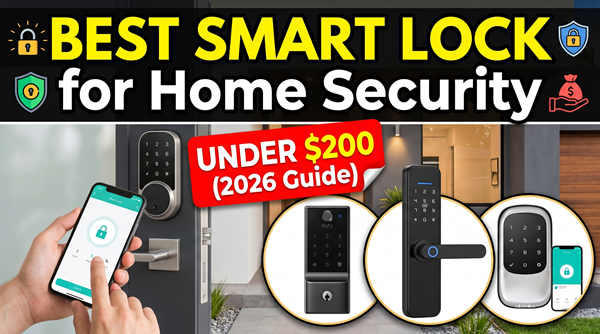
A robust smart lock that supports Matter and Apple HomeKey. It features a lightning-fast fingerprint reader and a physical key backup. It is one of the few budget-friendly locks that feels like a premium security product.
Check Price on Amazon →Ecobee Smart Thermostat Enhanced
A top-tier thermostat that balances ease of use with powerful automation. It includes a remote sensor to eliminate hot and cold spots in your home and works seamlessly with all Matter-enabled hubs.
Check Price on Amazon →Eufy Video Doorbell E340
A dual-camera doorbell that eliminates blind spots. It offers local storage, meaning you don't have to pay a monthly fee to see your video history. The AI detection is fast and runs entirely on the device.
Check Price on Amazon →What most people miss is that Thread devices create a self-healing network. If one light bulb goes offline, the rest of the house stays connected. This is a massive upgrade from the old days of Zigbee or Wi-Fi-only setups. By sticking to Matter-over-Thread devices, you are future-proofing your home against the next five years of tech shifts.
In this $1,000 blueprint, we are prioritizing local control. This means when you flip a switch, the signal stays inside your house. It does not travel to a server in another country and back. This makes your home faster and keeps your data private. Plus, your automations will still work even if your ISP has an outage.
The Brain: Choosing Your Command Center
Every smart home needs a brain, or what the industry calls a 'Border Router.' This is the device that connects your Thread network to your home internet. You do not need a dedicated $500 server anymore. In fact, you probably already own a device that can do this.
For this budget, I recommend the Apple TV 4K (the version with Ethernet) or the latest Nest Hub Max. These act as your primary hub. They handle the heavy lifting of processing your voice commands and running your automations. If you are an Android household, the Google route is great. If you use iPhones, the Apple TV is the gold standard for stability.
The hub is the one area where you should not cheap out. A weak hub leads to 'No Response' errors in your app, which is the fastest way to make you hate your smart home. Spend the $130 to $150 here to save yourself a hundred headaches later.
Lighting: The High-Impact, Low-Cost Win
Lighting is the soul of a smart home. But do not go out and buy 30 smart bulbs. That is a rookie mistake. Smart bulbs are expensive, and if someone flips the physical wall switch, the bulb loses power and becomes 'dumb' again.
Instead, use a mix of smart switches and a few select smart bulbs. Smart switches replace the ones in your wall. They keep your existing 'dumb' bulbs smart, and they work even if guests use the physical switch. For lamps and accent lighting, that is where you use the color-changing smart bulbs.
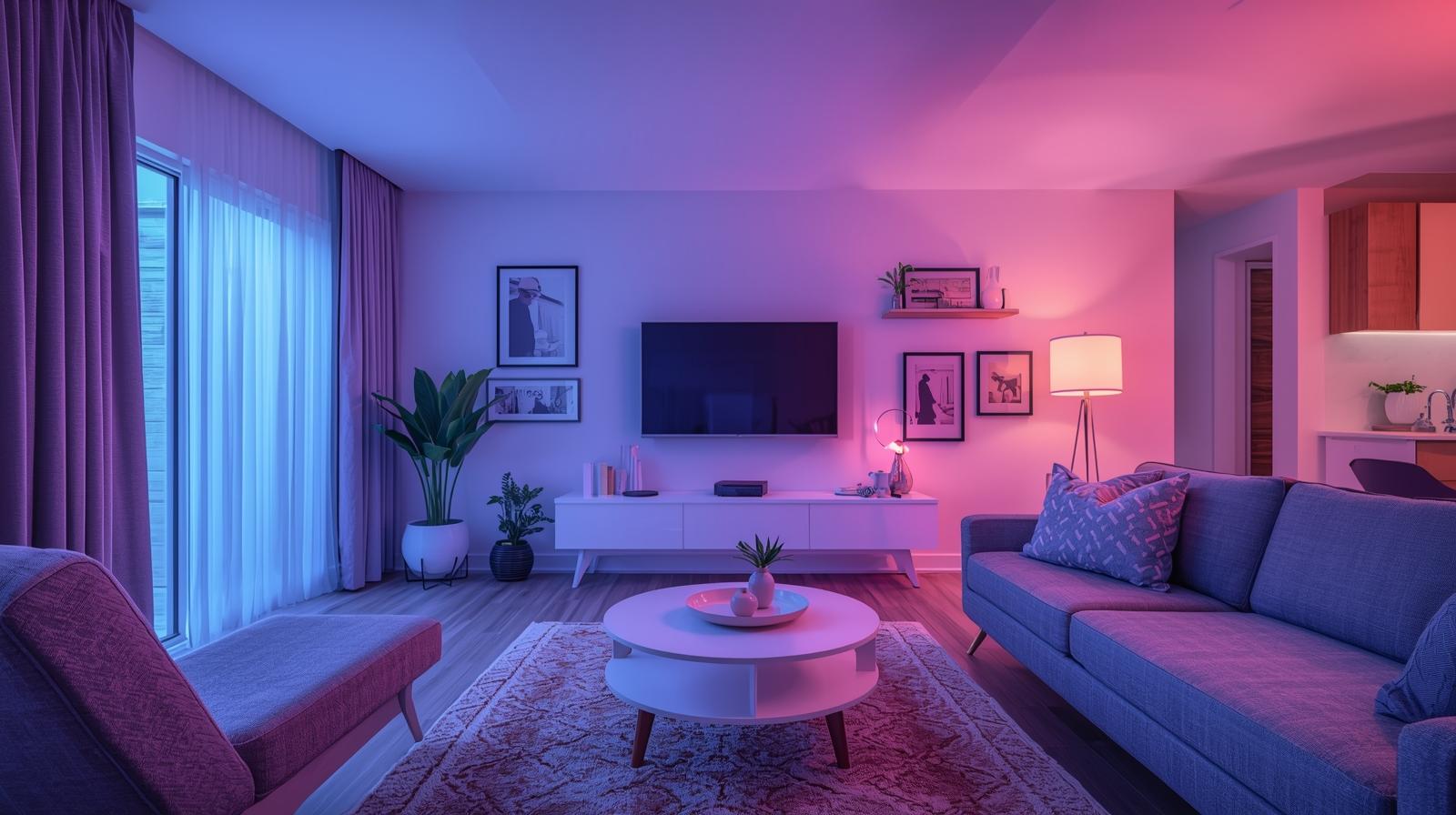
In 2026, brands like TP-Link Tapo have dominated the budget space by offering Matter-certified bulbs that cost less than a lunch special. You can outfit an entire living room and kitchen for under $100. Focus on 'Circadian Lighting'—automations that make your lights warm and dim in the evening and bright and cool in the morning. It sounds like a luxury, but it is a game-changer for your sleep cycle.
Security Without the Monthly Tax
The biggest scam in smart homes is the $15-a-month security subscription. You do not need it. Modern cameras and doorbells now come with enough onboard AI to tell the difference between a package, a person, and a stray cat without needing a cloud server.
For our $1,000 build, we are looking at Eufy or Aqara. These brands allow you to store video locally on a hub inside your house. You get the alerts on your phone, you can see the live feed, and you own the data. No monthly bills, ever.
A smart lock is the other half of this equation. Look for one with a fingerprint reader. In my experience, fumbling for a phone or a key is annoying. Touching a sensor for 0.5 seconds to unlock your door feels like magic every single time. The Aqara U100 is the current king of this category, offering Matter support and Apple HomeKey compatibility at a price that fits our budget.
Climate Control: Tech That Pays for Itself
A smart thermostat is the only part of this list that actually puts money back in your pocket. By using sensors to know when you are home or away, a good thermostat can shave 15% off your energy bill. In most cases, the device pays for itself in less than two years.
The key here is 'Room Sensors.' Most thermostats measure the temperature in the hallway, which is useless if you are sleeping in a bedroom that is five degrees colder. By placing a small sensor in your office or bedroom, the system ensures the rooms you are actually using stay comfortable.
Ecobee remains the top choice here because their sensors are incredibly reliable and they play well with every major smart home platform. They also have built-in air quality monitoring, which is a nice bonus for keeping your home healthy.
The $1,000 Blueprint: Budget Breakdown
| Category | Device Recommendation | Estimated Price |
|---|---|---|
| The Hub | Apple TV 4K (128GB + Ethernet) | $130 |
| Lighting | Tapo Matter Bulbs (8-pack) + 2 Smart Switches | $120 |
| Security | Eufy Video Doorbell E340 (Dual Camera) | $180 |
| Entry | Aqara Smart Lock U100 | $190 |
| Climate | Ecobee Smart Thermostat Enhanced | $190 |
| Sensors | Aqara P2 Motion & Door Sensors (3-pack) | $90 |
| Total | Complete Integrated System | $900 |
This leaves you with $100 for taxes, some extra mounting tape, or maybe a few smart plugs for your coffee maker and Christmas lights. This is a complete, high-end system that does not rely on any single company's cloud.
The Secret Sauce: Automations That Actually Matter
Having a bunch of apps on your phone is not a smart home; it is just a remote-controlled home. A real smart home happens when you stop touching your phone entirely. Here are three automations you should set up immediately:
- The 'Goodnight' Routine: One tap (or voice command) locks the front door, turns off all the lights, sets the thermostat to 68 degrees, and checks if the garage door is closed.
- The 'Welcome Home' Scene: When your smart lock detects your fingerprint between 5:00 PM and 9:00 PM, it turns on the entryway lights and starts your favorite playlist.
- The 'Energy Saver': If the door sensors detect that a window has been open for more than two minutes, the thermostat automatically turns off the AC to save power.
These are the things that make your home feel like it is working for you. Start small. Pick one room, get it perfect, and then expand. The beauty of a Matter-based system is that you can add a single sensor next month for $20 and it will integrate perfectly with everything you bought today.
Avoiding the 'Smart Home Headache'
The biggest mistake I see? Buying 'No-Name' brands from discount sites. They might be Matter-compatible on paper, but their hardware quality is often terrible. Stick to the brands that have a track record of firmware updates. You want your light switches to last ten years, not ten months.
Also, do not ignore your Wi-Fi. Even with Thread doing the heavy lifting, your main hub needs a solid connection. If your router is more than four years old, that should be your first upgrade before you buy a single smart bulb. A mesh Wi-Fi system is the foundation upon which everything else sits.
Lastly, keep it simple for the other people in your house. If your partner or kids can't figure out how to turn on the kitchen lights without an instruction manual, you have failed. Always ensure there is a physical way to control every 'smart' feature in the house. Technology should be an invisible helper, not a barrier to entry in your own living room.
Frequently Asked Questions
Do I need a high-speed internet connection for this setup?
While you need internet for initial setup and remote access, a Matter-over-Thread system works locally. This means your lights and automations will still function even if your internet goes down.
Can I mix Apple and Android devices in this $1000 setup?
Yes. Because we are focusing on Matter-certified devices, you can control the same light bulb from an iPhone, an Android tablet, or an Alexa speaker simultaneously.
Is professional installation required for the smart lock or thermostat?
Most people can install these in about 30 minutes with a screwdriver. However, if you are uncomfortable touching thermostat wiring or replacing a deadbolt, a local handyman can usually do it for a small fee.