 By Alex Morgan
Our Editorial Research & Methodology
The Reality of Smart Homes in 2026
Building a smart home used to feel like a part-time job. You had to worry about which bridge talked to which hub and why your lightbulbs suddenly forgot how to be bulbs. In 2026, the landscape has changed. We are firmly in the era of Matter and Thread. This means your devices actually talk to each other without a dozen digital translators. For a 3-bedroom house, you have enough space to need a real strategy, but not so much that you need enterprise-grade networking. This guide is about making your home work for you, not the other way around.
Why the 3-Bedroom Layout is Unique
A 3-bedroom home usually means a mix of shared spaces and private retreats. You likely have a master suite, a guest room or office, and a kids room or hobby space. Each of these needs a different automation profile. You do not want the motion-sensor lights in the hallway waking up the kids at 2 AM, but you definitely want them on when you are stumbling toward the kitchen for water. We are going to look at how to blanket this specific footprint with tech that stays out of the way until it is needed.
The Foundation: Networking and the Hub
Before you buy a single smart plug, look at your router. If you are still using the box your internet provider gave you three years ago, it is time for an upgrade. A 3-bedroom house typically spans 1,500 to 2,400 square feet. Walls are the enemy of signal. In 2026, Wi-Fi 7 is the standard for anyone serious about connectivity. It handles the massive device density of a smart home without breaking a sweat.
🏆 Our Top Picks
TP-Link Deco BE85 Mesh Wi-Fi 7 System
This tri-band mesh system provides up to 22 Gbps speeds and covers up to 6,600 sq. ft., making it perfect for a 3-bedroom house. It includes built-in Matter support and acts as a Thread border router, ensuring all your smart devices stay connected with minimal latency. It is best for users who want a future-proof network that can handle 200+ devices.
Check Price on Amazon →Ecobee Smart Thermostat Premium
This thermostat includes a built-in air quality monitor and a remote room sensor to balance temperatures across different bedrooms. It integrates perfectly with all major platforms and uses radar technology to detect occupancy more accurately than standard PIR sensors. One downside is the higher price point compared to basic smart thermostats.
Check Price on Amazon →Schlage Encode Plus Smart WiFi Deadbolt
The Encode Plus supports Apple Home Key, allowing you to unlock your door by tapping your iPhone or Apple Watch. It is one of the most rugged and secure smart locks on the market, featuring a built-in alarm and Grade 1 security rating. The main limitation is that it is bulkier than some of its competitors.
Check Price on Amazon →Philips Hue Bridge and Smart Dimmer Switch
While many bulbs are moving to Matter, the Hue ecosystem remains the gold standard for reliability and lighting quality. Using their smart switches ensures that your lights remain 'smart' even when someone uses the wall toggle. The downside is the requirement of the Hue Bridge for the best features, though it now supports Matter.
Check Price on Amazon →Aqara U100 Smart Lock
A versatile Matter-compatible lock that offers fingerprint recognition, keypad entry, and physical key backup. It is ideal for side doors or garage entries in a 3-bedroom setup. It is highly responsive but requires an Aqara hub for the most advanced automation features outside of basic Matter control.
Check Price on Amazon →The Mesh Advantage
For a 3-bedroom layout, a single router in the living room will leave dead zones in the far bedrooms. You need a mesh system. Place the main node at your internet entry point and a satellite node in the hallway near the bedrooms. This ensures that your smart blinds in the master suite have the same snappy response as the TV in the lounge. Look for a system that supports Thread border routing. This allows your low-power devices like door sensors to communicate efficiently without clogging up your main Wi-Fi channels.
Choosing Your Ecosystem
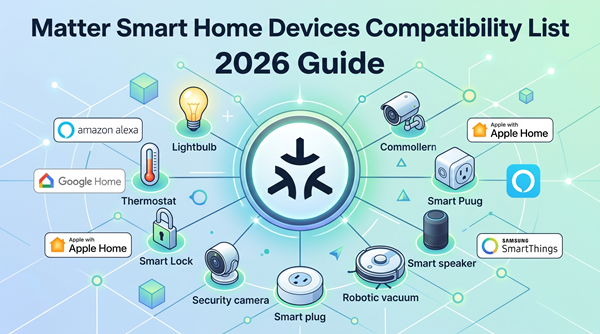
Here is the thing: you need to pick a primary interface. Whether it is Apple Home, Google Home, or Amazon Alexa, stick to one for your daily interactions. Thanks to Matter, you can buy almost any hardware now, but your family will thank you if there is only one app to learn. In my experience, Apple Home offers the best privacy, while Google remains the king of voice assistant intelligence. Choose based on the phones you already carry in your pockets.
Security: Protecting the Perimeter
Security is usually the first reason people get into smart home tech. For a 3-bedroom house, you need to think in layers. The first layer is the front door. A smart lock with Thread support is a game changer. You can stop hiding keys under the mat and start giving temporary codes to the dog walker or the neighbors.
Video Doorbells and Cameras
Your front door needs a video doorbell with local storage options. In 2026, we are seeing a shift away from expensive monthly subscriptions. Look for cameras that use on-device AI to distinguish between a package, a person, and a stray cat. For a 3-bedroom home, I recommend one doorbell camera, one floodlight camera for the backyard, and perhaps one indoor camera for the main living area that has a physical privacy shutter.
| Device Type | Ideal Placement | Key Feature to Look For |
|---|---|---|
| Smart Lock | Front and Back Doors | Matter over Thread support |
| Video Doorbell | Main Entrance | Head-to-toe view and local storage |
| Outdoor Camera | Driveway / Backyard | AI person detection |
| Contact Sensors | Ground Floor Windows | Long battery life (2+ years) |
Climate and Comfort: The Invisible Smart Home
The best smart home is the one you do not have to touch. This starts with the thermostat. A 3-bedroom house often has one HVAC zone, which means the master bedroom might be freezing while the living room is boiling. Smart room sensors solve this. By placing a sensor in each bedroom, the thermostat can average the temperature or prioritize the room you are actually in.
Smart Blinds and Lighting
Smart blinds are no longer a luxury; they are a tool for energy efficiency. In the summer, have your west-facing bedroom blinds close automatically when the sun hits them. This keeps the room cool without cranking the AC. For lighting, skip the smart bulbs in every single socket. It is expensive and annoying when someone flips the physical wall switch. Instead, use smart switches. This keeps the manual control your guests expect while giving you the automation you want.
Adaptive Lighting Scenarios
In 2026, we use adaptive lighting. This means your lights change color temperature throughout the day. Bright, cool white in the morning to wake you up, and warm, amber tones in the evening to help your brain produce melatonin. In a 3-bedroom house, you can program the kids room to start dimming at 7:30 PM, signaling that bedtime is approaching without you having to say a word.
The 3-Bedroom Automation Strategy
What most people miss is the logic behind the tech. You do not want a collection of gadgets; you want a system. Here is how to break it down by room:
- The Master Suite: Focus on sleep hygiene. A "Goodnight" routine that locks the doors, sets the alarm, and lowers the temperature to 68 degrees.
- The Kids Room: Focus on safety and routines. A nightlight that turns red if the door is opened after midnight, or a morning light that turns green when it is okay to come wake up the parents.
- The Home Office: Focus on productivity. A smart plug for the coffee maker that triggers when your computer wakes up, and lighting that adjusts for video calls.
- The Living Room: Focus on entertainment. A "Movie Night" scene that dims the lights and closes the shades with one voice command.
Managing Energy and Water
Do not overlook the utility closet. A smart leak detector near the water heater or under the kitchen sink can save you thousands in insurance deductibles. In a 3-bedroom home, you likely have multiple bathrooms and a laundry room. A small sensor in each of these spots is the cheapest insurance you will ever buy. Many modern systems can even shut off your main water valve automatically if a leak is detected.
Privacy and Future-Proofing
As we move further into 2026, data privacy is the biggest concern. When you are setting up your 3-bedroom house, look for devices that support "Local Control." This means that if your internet goes down, your lights still turn on and your automations still run. It also means your data stays inside your four walls instead of being processed in a corporate cloud. Matter is the key here, as it is designed to work locally by default.
Maintenance and Updates
Smart homes require a little bit of digital dusting. Once a quarter, check your app for firmware updates. These updates often include security patches and new features. Also, check the battery levels on your sensors. Most modern apps will give you a low-battery warning, but it is better to be proactive before your front door sensor dies in the middle of the night.
Final Thoughts on the Complete Setup
Building a smart home for a 3-bedroom house is about balance. You want enough tech to make life easier, but not so much that your home feels like a laboratory. Start with the backbone—the network and the hub—and then add devices that solve your specific frustrations. Whether it is a cold bedroom or a worry about the front door being locked, there is a smart solution that fits. Just remember: if the tech makes a simple task harder, it is not smart; it is just a nuisance. Keep it simple, keep it local, and enjoy the convenience of a home that finally understands you.
Frequently Asked Questions
Do I need a hub for every brand of device?
No. With the Matter protocol standard in 2026, a single Matter-compatible hub (like a HomePod, Nest Hub, or Echo) can control devices from various manufacturers, eliminating the need for multiple proprietary bridges.
Is Wi-Fi 7 necessary for a smart home?
While not strictly required for a few bulbs, Wi-Fi 7 is highly recommended for a 3-bedroom home to handle the high device density and provide the low latency needed for security cameras and responsive automation.
What happens to my smart home if the internet goes out?
If you use Matter-compatible devices with local control, your basic automations and switches will still work. You only lose remote access and voice assistant features that require cloud processing.