 By Olivia Brooks
Our Editorial Research & Methodology
The Reality of California Energy in 2026
If you live in California, you already know the drill. Opening your utility bill feels like a high-stakes gamble you always lose. Between the rising rates from PG&E, SCE, and SDGE, and the shift to the Net Billing Tariff (NEM 3.0), the old ways of saving energy just do not cut it anymore. It is not just about turning off the lights when you leave a room. It is about outsmarting a grid that charges you triple for electricity just when you need it most.
In 2026, the goal has shifted. We are no longer just trying to use less power; we are trying to use power better. This means shifting your usage to when the sun is shining and storing that energy for the expensive evening hours. To do that, you need a specific kit of devices designed for the California landscape. Let us break down the tech that actually moves the needle on your monthly statement.
Why California is Different
Most energy advice is written for people in the Midwest or the East Coast. They worry about freezing winters. In California, our biggest enemy is the 'Duck Curve.' This is the massive gap between solar production during the day and the spike in demand at night. Because of this, California utilities use Time-of-Use (TOU) rates. If you run your dryer at 6:00 PM, you are paying a premium. The devices we are looking at today are designed to automate that headache away so you do not have to think about it.
1. The Brain: Smart Electrical Panels
The old gray metal box in your garage is a relic. In 2026, the smart electrical panel has become the most important energy-saving device you can own. Think of it as the air traffic controller for your home. Instead of just being a collection of dumb breakers, a smart panel like the Span or Schneider Pulse allows you to see exactly where every watt is going in real-time.
🏆 Our Top Picks
Span Smart Electrical Panel
The ultimate command center for a modern home. It replaces your standard breaker box and gives you circuit-level control via an app. It is essential for managing battery backup and identifying energy-wasting appliances in real-time. The only downside is the high installation cost compared to a 'dumb' panel.
Check Price on Amazon →Rheem ProTerra Plug-in Heat Pump Water Heater
A game-changer for California retrofits because it plugs into a standard 120V outlet, avoiding expensive electrical upgrades. It is incredibly efficient and features built-in TOU scheduling to avoid heating water during peak rate hours. It can be slightly noisy, so it is best installed in a garage or utility closet.
Check Price on Amazon →Tesla Powerwall 3
The most integrated battery solution for California's Net Billing Tariff. It features a built-in solar inverter, which simplifies installation and increases efficiency. Its software is specifically designed to maximize 'self-consumption' for CA homeowners. The main drawback is the long lead times for installation in some regions.
Check Price on Amazon →Ecobee Smart Thermostat Premium
More than just a thermostat, it includes an air quality monitor and works with remote sensors to eliminate hot spots. Its 'eco+' feature automatically integrates with California utility peak-event programs to save you money during heatwaves. It does require a C-wire for power, which older homes might lack.
Check Price on Amazon →Emporia Smart Home Energy Monitor
The best budget-friendly way to get data on your energy use. It installs inside your existing breaker box using CT clamps and monitors up to 16 individual circuits. It is perfect for those who want the data of a smart panel without the $4,000 price tag. It does require a bit of DIY comfort to install safely.
Check Price on Amazon →Here is the thing: most people think they know what uses the most energy, but they are usually wrong. You might be obsessing over your LED bulbs while your old refrigerator in the garage is sucking down 20 percent of your bill. A smart panel identifies these vampires. More importantly, it allows for 'load shedding.' If the grid is stressed or if you are running on battery power, the panel can automatically shut off non-essential circuits like the dishwasher or the guest room AC to keep your lights and fridge running longer.
The ROI of Smart Panels
While the upfront cost is higher than a standard panel, the savings come from precision. In California, these panels are often the key to qualifying for specific 'Virtual Power Plant' (VPP) programs. These programs actually pay you to let the utility briefly reduce your power draw during peak events. By 2026, these incentives have become a significant way for California homeowners to claw back some of their utility costs.
2. The Heavy Lifter: Heat Pump Water Heaters
If you are still heating water with gas or a standard electric resistance tank, you are burning money. Water heating is typically the second-largest energy expense in a California home. Enter the heat pump water heater (HPWH). Instead of creating heat, it moves heat from the surrounding air into the water. It is essentially an air conditioner running in reverse.
In 2026, models like the Rheem ProTerra have become the gold standard. These units are up to four times more efficient than gas heaters. But the real magic for Californians is the 'Time of Use' scheduling. You can program the heater to 'overdrive' during the middle of the day when solar power is abundant and electricity is cheap (or free if you have panels). The tank then acts like a thermal battery, keeping that water hot well into the evening peak hours without drawing a single watt from the grid when rates are high.
| Feature | Standard Electric Tank | Heat Pump Water Heater |
|---|---|---|
| Efficiency | 100% (1:1) | 300% - 400% |
| Annual Savings (CA Avg) | $0 | $350 - $600 |
| Grid Interaction | None | Smart Scheduling / TOU |
| Lifespan | 10-15 Years | 13-15 Years |
3. Beating NEM 3.0: Home Battery Storage
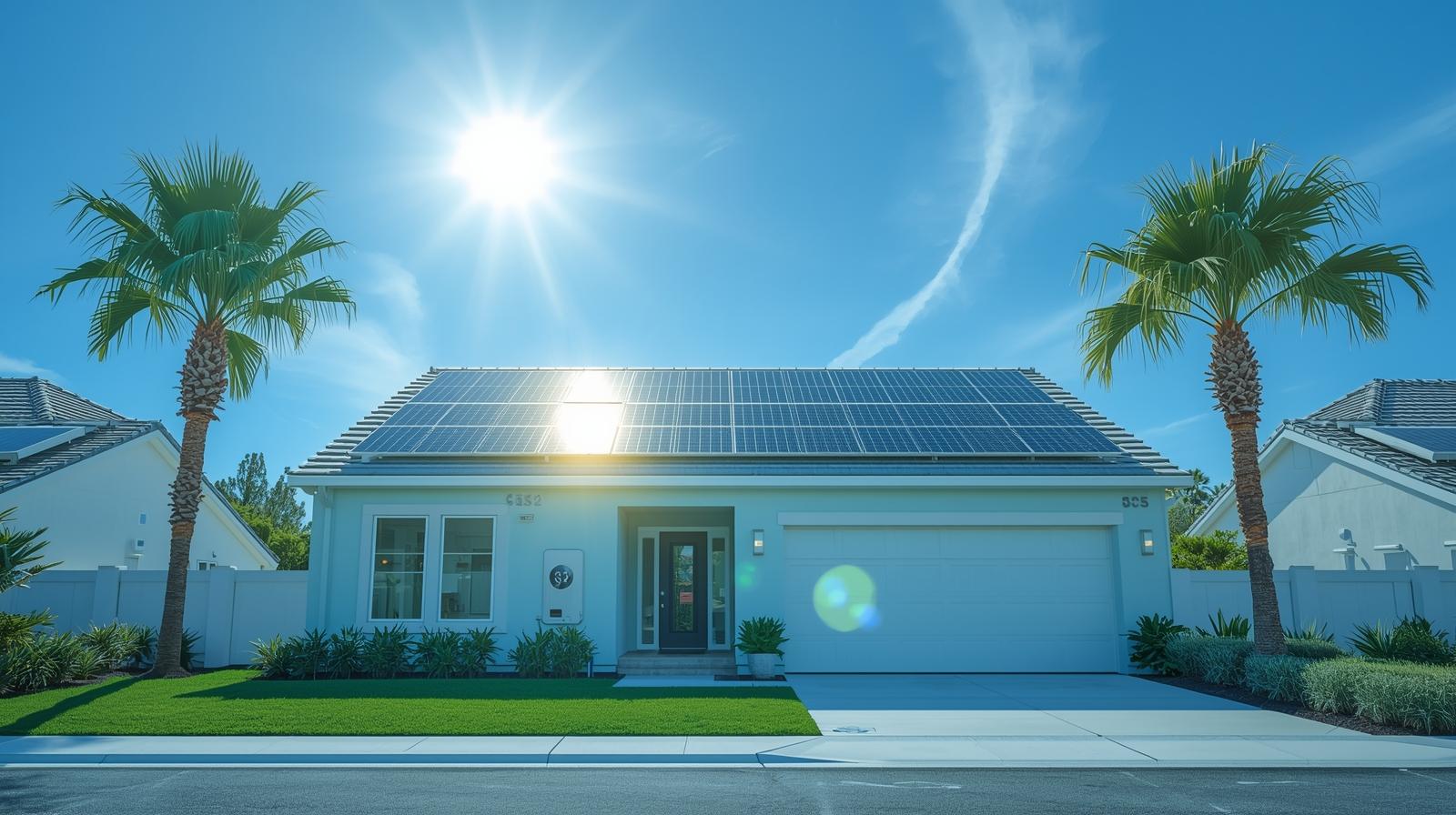
We have to talk about the elephant in the room: NEM 3.0. If you installed solar in California after April 2023, the credit you get for sending power back to the grid is about 75 percent lower than it used to be. This changed the game. Selling power to the utility is now a bad deal. The goal now is 'self-consumption.'
A home battery, like the Tesla Powerwall 3 or the Enphase IQ Battery, is no longer a luxury; it is a financial necessity for solar owners. By storing your excess solar energy during the day and using it between 4:00 PM and 9:00 PM, you avoid the highest utility rates of the day. In my experience, a well-sized battery system can reduce your reliance on the grid by 80 percent or more during the summer months.
The 2026 Battery Landscape
By now, battery chemistry has stabilized around Lithium Iron Phosphate (LFP), which lasts longer and is safer than older cobalt-based batteries. We are also seeing the rise of 'stackable' systems. You do not have to buy a massive 20kWh system on day one. You can start small and add modules as your budget allows. This modularity has made energy independence much more accessible to the average California household.
4. Smart HVAC Management
Air conditioning is the king of the California summer bill. But you do not necessarily need to replace your whole AC unit to see big savings. Smart thermostats have evolved. In 2026, they do more than just follow a schedule; they use geofencing and AI to predict when you will be home and how the house reacts to outside temperatures.
What most people miss is the importance of 'precooling.' A smart thermostat can be set to drop your home's temperature by 3 or 4 degrees at 2:00 PM when electricity is cheaper. When the 4:00 PM peak rate hits, your AC can stay off for hours because the thermal mass of your home is already cool. This 'shifting' of the load is the secret sauce to a $100 bill instead of a $400 bill.
The Role of Smart Vents
If you have rooms that are always too cold or too hot, you are wasting energy. Smart vents, like those from Flair, work with your thermostat to close off airflow to unoccupied rooms. Why cool the guest bedroom all day if no one is in it? By directing the air only where it is needed, your system runs for shorter cycles, extending the life of your equipment and saving a fortune over the long haul.
5. The New Frontier: Bidirectional EV Charging
By February 2026, many of the electric vehicles on California roads are capable of 'Vehicle-to-Home' (V2H) charging. Your car is essentially a massive battery on wheels. A typical EV battery holds enough energy to power an average home for three to five days.
Devices like the Wallbox Quasar 2 allow you to use your car's battery to power your home during peak hours or during a Public Safety Power Shutoff (PSPS). This is a game-changer. Instead of buying a separate home battery, your car serves double duty. While the hardware for bidirectional charging is still an investment, the potential to completely offset your evening energy use is massive. It turns your most expensive purchase into your most effective energy-saving tool.
6. Passive Tech: Smart Windows and Insulation
Not every energy-saving device needs a circuit board. In California's climate, the sun is a heat lamp. Low-E (low-emissivity) window films and smart blinds are essential. Smart blinds can be programmed to close automatically when the sun is hitting the west side of your house, blocking the heat before it ever enters your living room.
In my experience, people often overlook the 'envelope' of the home. You can have the most efficient AC in the world, but if your attic insulation is thin, you are just cooling the neighborhood. In 2026, we are seeing more homeowners use 'cool roof' coatings and aerogel-based insulation. These materials are incredibly thin but offer R-values that were previously impossible, keeping your home at a stable temperature with minimal mechanical help.
7. Navigating Rebates and Incentives
You should never pay full price for these devices in California. The state has some of the most aggressive incentive programs in the country. The HEEHRA (High-Efficiency Electric Home Rebate Act) provides point-of-sale rebates for heat pumps and electrical upgrades for low-to-moderate-income households.
Additionally, the Self-Generation Incentive Program (SGIP) still offers significant rebates for battery storage, especially if you live in a high-fire-threat district. Before you buy anything, check with your local utility and the 'TECH Clean California' initiative. Many of these programs can cover 30 to 50 percent of the total cost, significantly shortening your break-even period.
Final Thoughts
Saving energy in California in 2026 is about being proactive. The days of 'set it and forget it' with a standard thermostat are over. By combining smart load management, efficient heat pumps, and strategic battery storage, you can effectively opt-out of the rising utility rate spiral. It takes an initial investment, but in a state where electricity prices show no sign of slowing down, these devices are the best hedge you have against an expensive future.
Frequently Asked Questions
Is solar still worth it in California under NEM 3.0?
Yes, but only if paired with a battery. Without a battery, you export energy for pennies and buy it back for dollars. A battery allows you to use your own power, making the ROI much stronger.
How much can I really save with a heat pump water heater?
The average California family can save between $300 and $600 annually. When you factor in state rebates that often cover the price difference from a standard heater, the payback period is often less than two years.
Do smart panels require a full home rewire?
Usually no. A smart panel like Span replaces your existing breaker box. While it requires a professional electrician, it uses your existing home wiring to provide its monitoring and control features.