 By Olivia Brooks
Our Editorial Research & Methodology
The Summer Bill Shock is Real
We have all been there. You open your utility app in July, and your heart sinks. The number staring back at you looks more like a car payment than a power bill. In the United States, cooling accounts for about 12 percent of the average home's total energy expenditure, but during the sweltering summer months, that number can easily triple. The good news? You do not have to choose between bankruptcy and heatstroke. Lowering your electric bill is not about one big change; it is about a dozen small, smart moves that add up to massive savings.
In my experience, most homeowners focus on the wrong things. They worry about turning off a single LED bulb while their air conditioner is fighting a losing battle against a leaky attic. To really move the needle, we need to look at your home as a system. We are going to dive deep into the physics of cooling, the psychology of thermostat settings, and the high-tech tools available in 2026 that make energy management easier than ever.
Master Your Air Conditioning Strategy
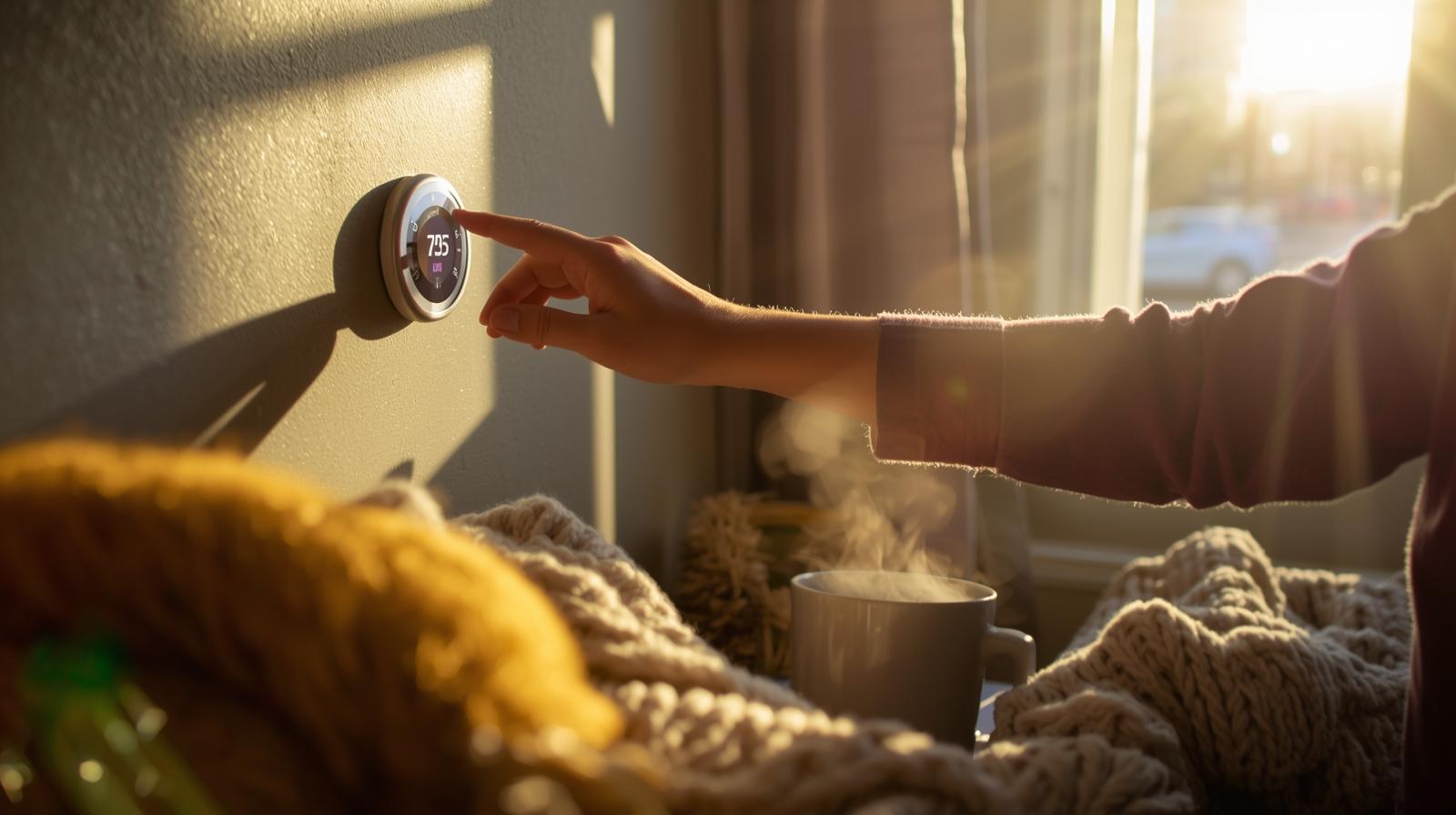
Your HVAC system is the undisputed heavyweight champion of energy consumption. If you want to save money, you start here. Most people treat their thermostat like a volume knob, cranking it down to 65 degrees when they get home, thinking it will cool the house faster. It does not. Your AC runs at one speed: full blast. Setting it lower just makes it run longer, wasting energy and putting unnecessary wear on the compressor.
🏆 Our Top Picks
Ecobee Smart Thermostat Premium
This is the gold standard for energy management. It uses remote sensors to balance temperatures across different rooms and includes a built-in air quality monitor. It excels at learning your schedule and automatically adjusting for Time-of-Use rates to save money without manual input. One downside is the higher upfront cost compared to basic smart models.
Check Price on Amazon →Emporia Smart Home Energy Monitor
This device installs directly into your electrical panel and provides real-time data on every circuit in your house. It is perfect for homeowners who want to identify 'vampire' loads and see exactly how much their AC costs per hour. The installation requires opening the breaker panel, which might be intimidating for some DIYers.
Check Price on Amazon →Midea U-Shaped Window Air Conditioner 12,000 BTU
If you need to cool a specific room, this is the most efficient window unit on the market. The U-shaped design allows you to close the window almost entirely, which blocks outside noise and prevents air leaks. It uses inverter technology to maintain temperature steadily rather than cycling on and off. It is, however, heavier and more complex to install than standard box units.
Check Price on Amazon →3M Thinsulate Climate Control Window Film
This professional-grade film acts like an extra pane of glass, reflecting heat out in the summer and keeping it in during the winter. It is virtually invisible and blocks 99 percent of UV rays, protecting your furniture from fading. The main trade-off is that it requires a very steady hand for a bubble-free DIY installation.
Check Price on Amazon →The 20-Degree Rule
Here is something most people miss: your air conditioner is generally designed to drop the indoor temperature by about 20 degrees compared to the outside air. If it is 100 degrees in Phoenix, your AC is going to struggle to hit 70. Pushing it past that limit is like redlining your car engine for hours. Aim for a setting of 78 degrees when you are home. I know, it sounds warm, but when combined with a ceiling fan, 78 degrees feels like 74. Every degree you raise the thermostat can save you up to 3 percent on your cooling costs.
Maintenance is Not Optional
A dirty AC unit is an expensive AC unit. When your filters are clogged with dust and pet hair, the blower motor has to work twice as hard to move air. Change your filters every 30 days during the peak of summer. Furthermore, go outside and look at your condenser unit. If it is buried in weeds or covered in grass clippings, it cannot shed heat efficiently. Spray it down with a garden hose to keep those fins clear. A well-maintained system can be 15 percent more efficient than a neglected one.
The Thermodynamics of Your Windows
Think of your windows as giant heaters. Even with the best double-pane glass, solar radiation pours into your home, heating up your floors, furniture, and air. This is called solar heat gain, and it is the primary reason your AC runs all afternoon. If you can stop the heat before it enters the room, you have already won half the battle.
The Power of Passive Cooling
During the day, close your blinds and curtains, especially on the south and west-facing sides of the house. Blackout curtains are great, but even simple white blinds can reflect a significant amount of light. If you want to get serious, consider reflective window films. These are thin, adhesive layers that block UV rays and infrared heat without making your house feel like a cave. In my experience, installing heat-control film on a large sliding glass door can drop the room temperature by 5 to 7 degrees instantly.
| Window Treatment | Heat Reduction Potential | Cost Level |
|---|---|---|
| Standard Blinds | Moderate | Low |
| Blackout Curtains | High | Medium |
| Reflective Film | Very High | Medium |
| Exterior Awnings | Maximum | High |
Smart Home Tech and AI Energy Management
By 2026, the way we interact with our power grid has changed. Many US utility companies now offer Time-of-Use (TOU) rates. This means electricity is cheap at 2 AM but incredibly expensive at 4 PM. If you are still running your dishwasher and dryer during peak hours, you are essentially throwing money away. Smart home technology allows you to automate the savings so you do not have to think about it.
The Rise of Demand Response
Many modern smart thermostats now participate in demand response programs. Your utility company might offer you a credit on your bill if you allow them to slightly adjust your thermostat during a heatwave. We are talking about a two-degree difference that you likely will not even notice. In 2026, AI-driven energy monitors like the Emporia or Sense systems can identify exactly which appliance is sucking the most power in real-time. When you can see that your old basement fridge is costing you 40 dollars a month, the decision to scrap it becomes very easy.
Managing the Home Envelope
Your house is like a cooler. If the lid is cracked, the ice melts. Most American homes have the equivalent of a medium-sized window left open year-round due to small air leaks. These leaks are usually found around plumbing stacks, recessed lighting, and the attic hatch. Hot, humid air from the attic is sucked down into your living space through these gaps, a phenomenon known as the stack effect.
Sealing the Leaks
Grab a can of spray foam and some weatherstripping. Check the seals around your doors. If you can see daylight under the door, you are cooling the porch. Use a door sweep to close that gap. In the attic, ensure your insulation is not compressed. If you can see the wooden floor joists, you do not have enough insulation. Aim for an R-value of at least R-49 or R-60 in most US climates. This creates a thermal barrier that keeps the 140-degree attic heat from migrating into your 75-degree bedroom.
The Stealth Heat Sources Inside Your Home
We often focus on the heat coming from outside, but we forget about the heat we generate ourselves. Every time you use the oven, you are fighting your air conditioner. An oven can easily raise the kitchen temperature by 5 to 10 degrees. During the summer, embrace the outdoor grill, the microwave, or the air fryer. These appliances use less energy and keep the heat out of the house.
The Vampire Load Myth
You have probably heard about vampire loads—devices that draw power even when turned off. While it is true that your TV and game console use a small amount of standby power, the real summer culprits are older appliances. That second refrigerator in the garage is likely working overtime because garages are not climate-controlled. If it is 95 degrees in your garage, that fridge is running 24/7. If you do not absolutely need it, unplug it for the summer. You could save 20 to 30 dollars a month just from that one move.
Strategic Behavioral Shifts
Sometimes the best way to save money is to change how you live. Pre-cooling is a strategy that has gained massive popularity recently. The idea is to over-cool your home in the early morning hours when electricity is cheap and the outside air is cool. By the time the sun is high and power prices spike, your home is already chilled, allowing your AC to take a break during the hottest part of the day.
- Use Ceiling Fans Correctly: Ensure your fan is spinning counter-clockwise. This creates a downdraft that provides a wind-chill effect on your skin. Remember: fans cool people, not rooms. Turn them off when you leave.
- Dehumidify: High humidity makes 75 degrees feel like 80. If your AC has a 'dry' mode, use it. Removing moisture from the air allows your body to cool itself more effectively through sweat.
- Laundry Timing: Only run the dryer at night. Dryers vent a massive amount of conditioned air out of the house and replace it with hot outdoor air.
What most people miss is the cumulative effect of these habits. One day of smart laundry and thermostat management might only save you two dollars. But over a 90-day summer, that is 180 dollars back in your pocket. In my experience, the most successful energy-savers are the ones who treat it like a game. Check your utility app daily. See how your changes affect the graph. Once you see the data, it becomes addictive.
Long-Term Investments for 2026 and Beyond
If you have the budget, there are bigger moves that pay for themselves over time. Heat pump technology has advanced significantly by 2026. Modern cold-climate heat pumps are now the standard for efficiency, offering both heating and cooling at a fraction of the cost of traditional systems. Additionally, the federal tax credits for energy efficiency are still robust, often covering 30 percent of the installation cost.
Solar panels combined with a home battery system are the ultimate defense against rising electric bills. With a battery, you can store cheap solar power during the day and use it during the expensive evening peak. Even if you cannot afford a full solar array, consider a solar-powered attic fan. These units pull hot air out of your attic using the sun's own energy, reducing the load on your AC without adding a penny to your bill.
The bottom line is that you have more control than you think. You do not have to suffer in a hot house to save money. By combining smart maintenance, strategic tech, and a few behavioral tweaks, you can keep your cool while your neighbors are sweating over their utility statements. Start with the free stuff—the filters and the blinds—and work your way up. Your wallet will thank you by August.
Frequently Asked Questions
Is it cheaper to leave the AC on all day or turn it off when I leave?
It is generally cheaper to let the temperature rise slightly (by 5-7 degrees) while you are away and cool it back down when you return. However, do not turn it off completely, as the AC will have to work for hours to remove the heat soaked into your walls and furniture.
Do ceiling fans actually lower the room temperature?
No, ceiling fans do not lower the temperature of a room; they only cool the people in it by accelerating the evaporation of moisture on the skin. Always turn fans off when you leave a room to save electricity.
What is the best temperature to set the AC at night?
For most people, 72 to 75 degrees is the sweet spot for sleep. Since outdoor temperatures drop at night, your AC does not have to work as hard to maintain these levels compared to the daytime.