 By Olivia Brooks
Our Editorial Research & Methodology
The Reality of Your Monthly Energy Bill
Look, nobody enjoys opening their utility bill in the middle of August or January. It usually feels like a personal attack on your bank account. In most homes, the HVAC system is the undisputed heavyweight champion of energy consumption, often accounting for more than half of your total energy use. But here is the thing: you do not have to just accept those high costs as a fact of life.
Reducing your HVAC energy costs is not about shivering in the winter or sweating through your shirt in the summer. It is about efficiency. It is about making sure the expensive air you just paid to heat or cool actually stays in your house and that your equipment is not working twice as hard as it needs to. If you want a deeper dive into the technical side, check out our How to Reduce HVAC Energy Costs: Expert Efficiency Guide for more granular details.
The Dirty Secret of Air Filters
I have seen this a hundred times. A homeowner complains their AC is not cooling, and the fix is a five-dollar piece of fiberglass. Your air filter is the lungs of your HVAC system. When it gets clogged with dust, pet hair, and dander, your system has to work significantly harder to pull air through. This is called static pressure, and it is an energy killer.
🏆 Our Top Picks
Ecobee Smart Thermostat Premium
This is the gold standard for smart control in 2026. It includes a built-in air quality monitor and a remote sensor that helps eliminate hot or cold spots in specific rooms. It is best for homeowners who want a 'set it and forget it' experience with deep data tracking.
Check Price on Amazon →Mitsubishi Electric Hyper-Heat Pump PUZ-HA
The leader in cold-climate heating technology. This unit provides 100% heating capacity down to 5 degrees Fahrenheit and continues to operate efficiently well below that. It is the perfect replacement for aging gas furnaces in northern climates.
Check Price on Amazon →Flair Smart Vents
These vents replace your standard floor or wall registers and connect to your smart thermostat. They automatically open and close to balance temperatures across your home, preventing you from wasting energy on empty rooms. Note that they require a Bridge to connect to your Wi-Fi.
Check Price on Amazon →Sense Energy Monitor
This device installs inside your electrical panel and uses machine learning to identify exactly how much power your HVAC system is drawing in real-time. It is best for data-driven homeowners who want to see the immediate impact of their efficiency changes. Installation requires a professional electrician.
Check Price on Amazon →3M Filtrete Smart Air Filter
This filter includes a Bluetooth sensor that tracks actual airflow and usage rather than just a calendar date. It tells you exactly when the filter is restricted enough to need changing, ensuring you don't waste money on early replacements or kill efficiency by waiting too long.
Check Price on Amazon →In my experience, most people wait far too long to change their filters. If you have pets or live in a dusty area, a 90-day filter might only last 30 days. When the motor has to fight to move air, it draws more amps. More amps mean more money out of your pocket. A clean filter can shave 5 to 15 percent off your cooling bill almost instantly. It is the cheapest maintenance task you can perform, yet it is the one most people skip.
Choosing the Right MERV Rating
Do not just buy the highest MERV (Minimum Efficiency Reporting Value) rating you can find. While a MERV 13 filter catches more particles, it is also much denser. If your system was not designed for that level of restriction, you might actually decrease efficiency and damage your blower motor. For most homes, a MERV 8 to 11 is the sweet spot for balancing air quality and energy flow.
Smart Thermostats: The Brain of the Operation
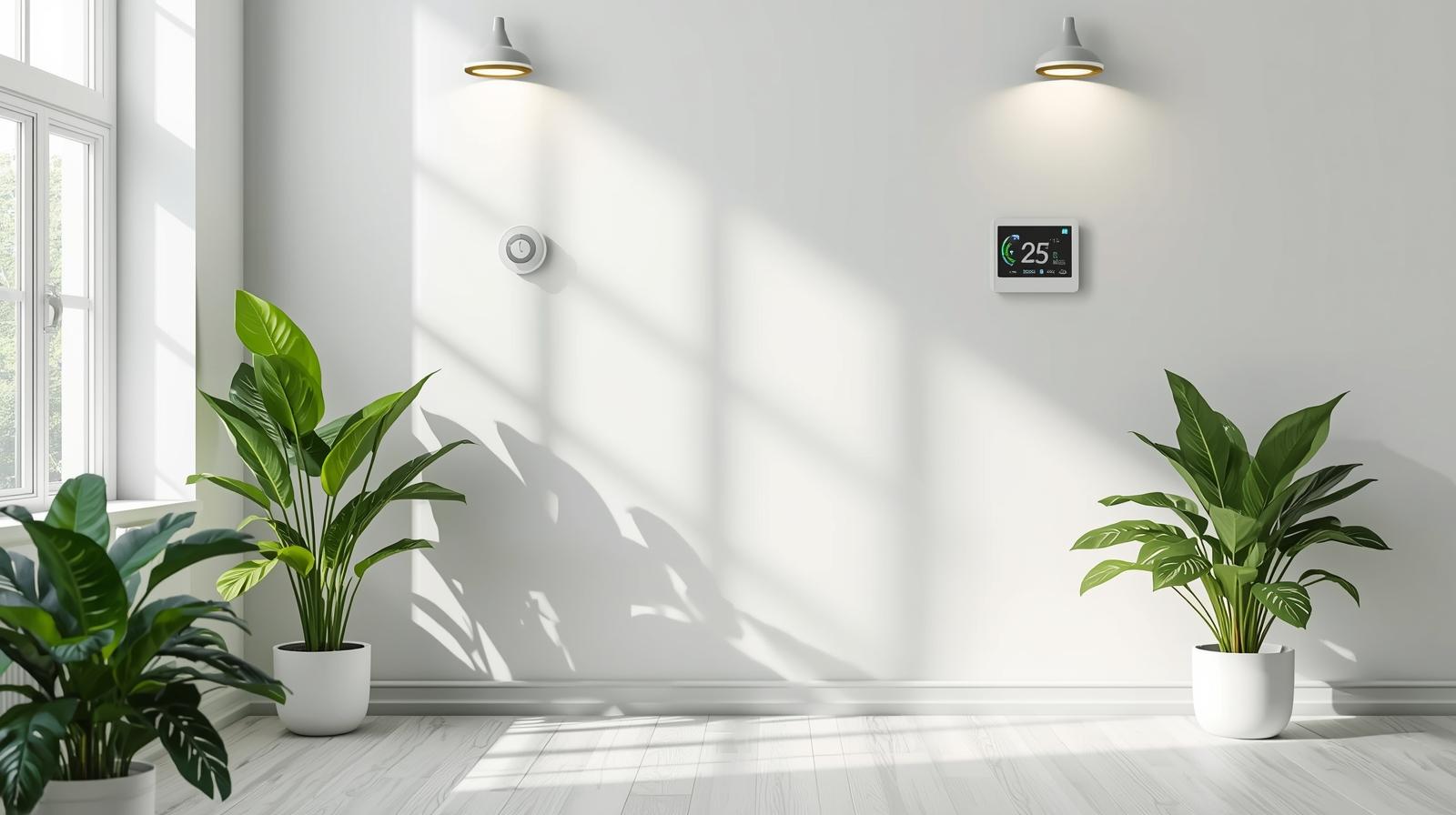
If you are still using a manual thermostat, you are essentially leaving your wallet open on the counter. By 2026, smart thermostats have evolved far beyond simple scheduling. Modern units use AI to learn your habits, the thermal profile of your home, and even the local weather forecast to optimize run times.
The real magic happens when you use geofencing. Your thermostat knows when your phone leaves the house and adjusts the temperature to a 'saving' mode. It then starts cooling or heating the house just before you arrive. This prevents the system from running all day for an empty house. What most people miss is that you do not need to set the temperature to 85 degrees when you leave; just a 7 to 10-degree shift for 8 hours a day can save you 10 percent a year on heating and cooling.
Sealing the Envelope: Stop the Leaks
You can have the most efficient HVAC system in the world, but if your house is 'leaky,' you are just cooling the neighborhood. Air leaks around windows, doors, and in the attic are the primary reason systems short-cycle (turn on and off too frequently). Short-cycling is incredibly inefficient because the startup phase of an HVAC cycle uses the most electricity.
- Check your weatherstripping: If you can see daylight around your door, you are losing money.
- Caulk the gaps: Use high-quality silicone caulk around window frames and where plumbing pipes enter the walls.
- The Attic Hatch: This is often the most overlooked leak. An uninsulated attic hatch is like leaving a window open all year.
In many homes, the ductwork itself is the problem. Leaky ducts in unconditioned spaces like crawlspaces or attics can lose up to 30 percent of the air before it ever reaches your living room. Sealing these ducts with mastic or specialized foil tape is a weekend project that pays for itself in months.
The Heat Pump Revolution of 2026
If your system is more than 12 years old, it might be time to stop repairing it and start replacing it. As of February 2026, heat pump technology has reached a point where it is viable even in extremely cold climates. Unlike traditional furnaces that create heat by burning fuel, heat pumps move heat from one place to another. It is much more efficient to move heat than to create it.
Efficiency Comparison Table
| System Type | Average Efficiency (SEER2/HSPF2) | Typical Monthly Cost | Best For |
|---|---|---|---|
| Standard AC + Gas Furnace | 14-16 SEER2 | High | Moderate Climates |
| High-Efficiency Heat Pump | 20-25 SEER2 | Low | All Climates (2026 Tech) |
| Ductless Mini-Split | 22-30 SEER2 | Very Low | Zoned Cooling/Additions |
Modern cold-climate heat pumps can maintain 100 percent capacity even when temperatures drop well below zero. When you factor in federal tax credits and state rebates available this year, the ROI on a high-efficiency heat pump is better than it has ever been.
Zoning and Airflow Management
Why are you cooling your guest bedroom at 2 PM on a Tuesday? Traditional HVAC systems are 'all or nothing.' They dump air into every room regardless of whether someone is in it. Smart vents and zoning systems allow you to redirect that airflow to the rooms you are actually using.
By closing off or reducing flow to unoccupied areas, the system reaches the target temperature in the main living areas faster, allowing the compressor to shut down sooner. However, be careful not to close more than 20 percent of your manual registers, as this can create backpressure that damages your system. Smart vent systems manage this automatically by monitoring pressure levels.
Simple Habits That Cost Zero Dollars
Sometimes the best way to reduce HVAC energy costs is to just change how you live in the space. Here are a few expert-level tips that do not require a credit card:
- The Ceiling Fan Trick: In the summer, run fans counter-clockwise to create a wind-chill effect. This allows you to raise the thermostat by 4 degrees without feeling any warmer. In the winter, run them clockwise at low speed to push trapped warm air down from the ceiling.
- Curtain Management: Close your curtains on the sunny side of the house during the day in summer. In winter, open them to let the sun provide free radiant heat.
- Clear the Outdoor Unit: Your outdoor condenser needs to breathe. If it is surrounded by tall grass, shrubs, or debris, it cannot shed heat efficiently. Keep a two-foot clear zone around the unit.
I have found that most homeowners can save at least 20 percent on their bills just by implementing these basic behavioral changes and keeping up with simple maintenance. It is not about one big fix; it is about the cumulative effect of several small improvements.
Professional Maintenance: The Annual Physical
Finally, do not skip the professional tune-up. A technician can do things you cannot, like checking refrigerant levels, cleaning the evaporator coils, and inspecting electrical connections. A system that is low on refrigerant by even a small amount can see a 20 percent drop in efficiency. Think of it like a car; you can change the oil yourself, but occasionally you need a mechanic to look under the hood and make sure the timing belt isn't about to snap. Regular maintenance prevents the 'emergency' Saturday night service call that costs three times the normal rate.
Frequently Asked Questions
Is it cheaper to leave the AC on all day or turn it off when I leave?
It is cheaper to let the temperature rise while you are away. Your system does not 'work harder' to cool a warm house; it simply runs longer, but that total run time is still less than the cumulative cycles required to maintain a cool temperature in an empty house all day.
How do I know if my ductwork is leaking?
Look for uneven temperatures between rooms, excessive dust shortly after cleaning, or visible gaps at the joints in your attic or crawlspace. You can also perform a 'smoke test' near joints while the fan is running to see if the smoke is blown away or sucked in.
Are smart vents safe for my HVAC system?
Yes, if they are high-quality systems like Flair. These systems monitor static pressure to ensure that closing vents doesn't restrict airflow to the point of damaging the blower motor or freezing the evaporator coil.