 By Olivia Brooks
Our Editorial Research & Methodology
The Real Cost of a Dumb Home
Let's be honest. Most of us treat our electricity bill like a weather report. We look at the number, complain for a minute, and then pay it. But in 2026, with energy prices fluctuating based on grid demand and time-of-use rates, staying passive is costing you thousands. Your home is likely leaking money through what I call 'energy ghosts'—devices and habits that suck power while you are sleeping or at work.
The good news? You do not need to live in the dark or suffer in a cold house to save money. Smart home technology has moved past the 'cool gadget' phase and into the 'essential utility' phase. We are talking about devices that pay for themselves in six months and then keep putting money back in your pocket. Here is how you actually win the war against your utility company.
The Heavy Hitter: Smart Thermostats
If you want to make a dent in your bill, start with your HVAC system. Heating and cooling usually account for about 50 percent of a typical home energy bill. A traditional programmable thermostat is fine, but it is limited. It assumes your life follows a rigid 9-to-5 schedule. Life in 2026 does not work like that.
🏆 Our Top Picks
Ecobee Smart Thermostat Premium
This is the gold standard for HVAC control. It includes a built-in air quality monitor and a remote room sensor to eliminate hot and cold spots. It excels at learning your routine and automatically adjusting for energy savings when you leave the house.
Check Price on Amazon →Emporia Gen 2 Vue Whole Home Energy Monitor
This device provides real-time data on your home's energy use down to the individual circuit. It is perfect for homeowners who want to identify exactly which appliance is driving up their bill. The app interface is detailed and provides actionable cost breakdowns.
Check Price on Amazon →Kasa Smart Plug Power Strip KP303
Instead of buying individual plugs, this strip allows you to control three outlets independently. It is ideal for home offices or entertainment centers where you can schedule the entire desk or TV setup to power down at night. It features reliable surge protection as well.
Check Price on Amazon →Lutron Caseta Deluxe Smart Dimmer Switch Kit
Lutron is known for rock-solid reliability. These switches allow you to automate your existing 'dumb' bulbs. The geofencing feature ensures lights turn off when the last person leaves the house, and the dimming capability significantly reduces wattage use over time.
Check Price on Amazon →Eve Energy Matter-Enabled Smart Plug
This plug is built for the future with Matter support, ensuring it works with any smart home hub. It includes built-in energy consumption tracking so you can see exactly how much power the connected device is using in real-time. Note that it is slightly bulkier than some competitors.
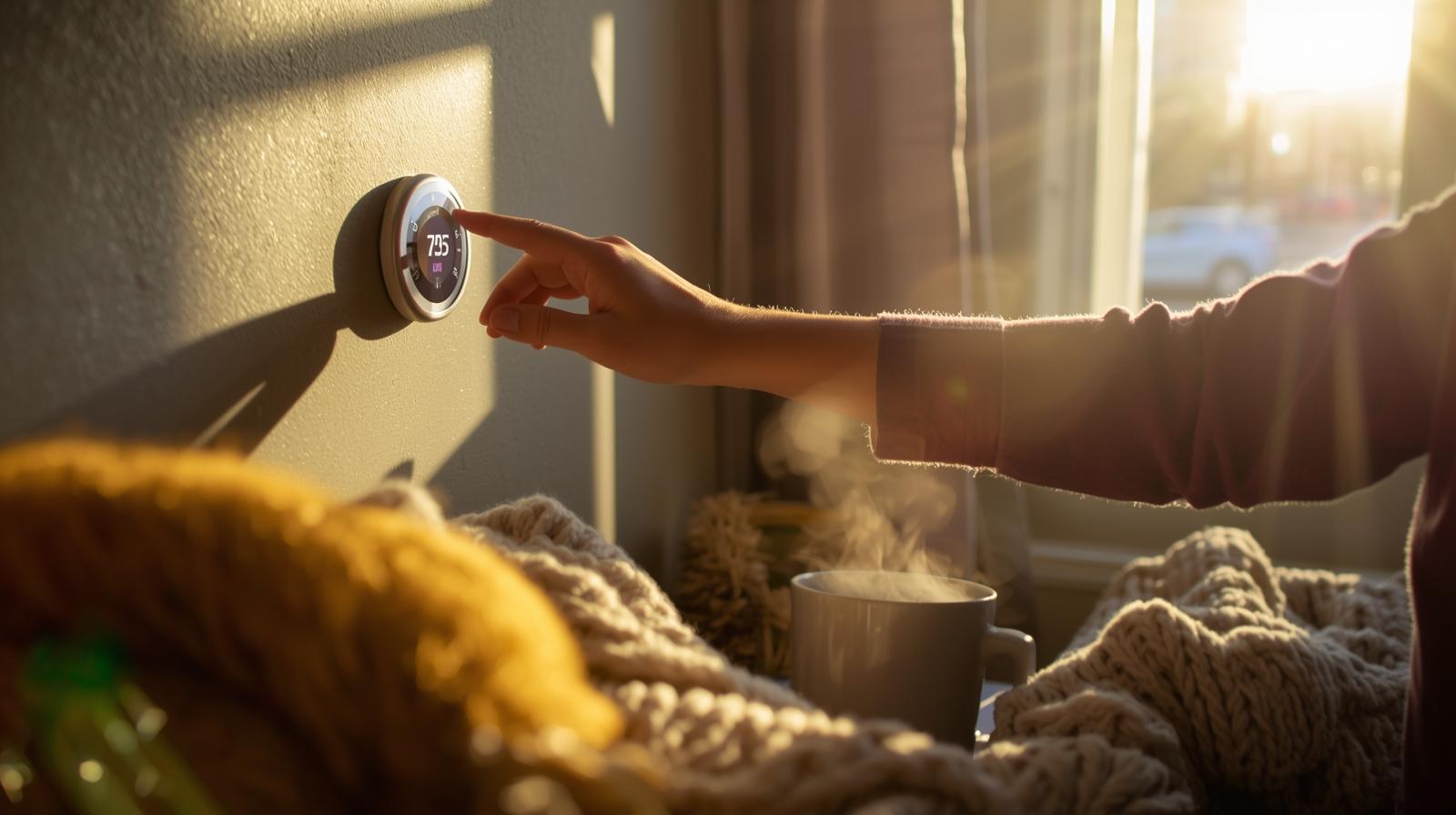
Check Price on Amazon →Smart thermostats use geofencing to know when you are actually home. If you are stuck in traffic or decide to stay out for dinner, the system stays in eco-mode. It does not heat an empty house. More importantly, modern units now integrate with 'Time-of-Use' (TOU) pricing. They can pre-cool your home when electricity is cheap and throttle back when the grid is stressed and prices spike. This is not just about comfort; it is about financial strategy.
Why Occupancy Sensors Matter
What most people miss is that a thermostat in the hallway does not know if your bedroom is freezing. By using remote sensors, the system balances the temperature based on where you actually are. This prevents the system from overworking to reach a target temperature in an empty room while you are shivering elsewhere.
The Invisible Drain: Smart Plugs and Vampire Power
Here is a stat that will annoy you: 'Vampire power'—the energy used by devices that are turned off but still plugged in—accounts for about 10 percent of your total bill. Your coffee maker, your old game console, and even your microwave are constantly sipping power. Individually, it is pennies. Collectively, it is a steak dinner every month.
Smart plugs are the simplest fix. You can set them to physically cut power to your entertainment center at midnight and turn it back on at 7 AM. In my experience, the best way to use these is through 'grouping.' One command or schedule can kill power to five different vampire devices at once. It is the easiest ROI in the smart home world.
Whole-Home Energy Monitors: The Brain
You cannot fix what you cannot measure. Most people have no idea which appliance is the biggest offender. Is it the 15-year-old fridge in the garage? The pool pump? The electric dryer? A whole-home energy monitor clamps onto your electrical panel and 'listens' to the electronic signature of every device in your house.
Within a week, it will tell you exactly how much it costs to run your dishwasher per cycle. This data is transformative. When you see a real-time graph showing that your space heater is costing you 50 cents an hour, you tend to turn it off a lot faster. These monitors also act as an early warning system. If your AC compressor starts drawing more power than usual, it is likely failing. Fixing it now is much cheaper than an emergency replacement in July.
Smart Lighting: The Low-Hanging Fruit
We have all heard that LED bulbs save money, but smart LEDs take it a step further. The biggest waste in lighting is not the bulb type; it is the human element. We leave lights on in empty rooms. Smart switches and bulbs with motion sensors solve this without you having to think about it.
In 2026, we are seeing more 'Daylight Harvesting' setups. Smart dimmers can adjust your indoor lights based on how much natural sun is coming through the windows. If it is a bright afternoon, your lights might only run at 20 percent brightness. You won't even notice the difference in light, but you will notice the difference in your bill.
Comparison of Energy Saving Potential
| Device Category | Estimated Monthly Saving | Difficulty to Install | Primary Benefit |
|---|---|---|---|
| Smart Thermostat | 15-25 percent | Medium | HVAC Optimization |
| Energy Monitor | 10-15 percent | Hard (Pro recommended) | Behavioral Change |
| Smart Plugs | 5-10 percent | Very Easy | Eliminating Standby Power |
| Smart Lighting | 5-7 percent | Easy | Automation and Dimming |
Smart Blinds: The Thermal Barrier
This is the most underrated category in energy saving. Windows are essentially holes in your insulation. In the summer, the sun bakes your interior, forcing the AC to work overtime. In the winter, heat escapes through the glass. Smart blinds can be programmed to close automatically when the sun is at its peak intensity.
By using local weather data, these blinds act as a dynamic thermal barrier. If the forecast says it will be 95 degrees, the blinds close at 10 AM on the south side of the house. This keeps the ambient temperature lower without the AC ever kicking in. It is passive cooling at its smartest.
The Strategy: Where to Start?
Do not go out and buy 50 devices tomorrow. That is a recipe for frustration. Start with a smart thermostat and a few smart plugs for your biggest vampire loads (like the TV setup). Once you see the savings, invest in a whole-home monitor. The monitor will show you exactly where your next investment should be. If it shows your water heater is a hog, look into a smart water heater controller next.
The goal is to create a home that thinks for you. You have enough to worry about; your electricity bill shouldn't be one of them. By automating the boring stuff, you save money while you sleep. That is the real promise of the smart home in 2026.
Frequently Asked Questions
Do smart home devices use electricity themselves?
Yes, but the amount is negligible. A smart plug uses about 0.5 to 1 watt of power to stay connected, while it can save you 10 to 50 watts by killing vampire loads from larger appliances.
Is it hard to install an energy monitor?
Whole-home monitors like Emporia require opening your electrical panel and clipping sensors around the main power lines. If you are not comfortable with high-voltage electricity, you should hire an electrician for a 30-minute install.
Will these devices work if my internet goes out?
Most modern devices using the Matter or Zigbee standards will continue to follow their local schedules and sensor triggers even without an active internet connection, though you won't be able to control them via your phone remotely.